Showing posts with label Literature. Show all posts

Wednesday, November 1, 2017

Reading and other Fall Pleasures


I am very happy to say hello to November. Fall has officially arrived in Los Angeles and what a relief it is. Last week we were in deep, deep summertime heat. The temperatures hovered in the eighties throughout most of October and for several days even in the hundreds. Finally the heat wave has broken and we are enjoying some cool weather. Autumn has arrived!

For me fall is the cozy season. It's all about cooking, nesting, having friends over, making the first fire of the season, and getting ready for the holidays. It is my favorite time of the year. I would also add reading as one of my favorite activities when the weather gets cooler. I tend to read more ambitious books at this time of year, often selecting a classic which I can sink into on a chilly afternoon.

Right I am rereading "The House of Mirth" by Edith Wharton. This book still takes my breath away. Edith Wharton was a superb writer, story teller, and observer of society. This book is definitely one of her masterpieces and an excellent example of literary fiction, an interesting category that has been on my mind lately. I recently went to a Writing Retreat in Italy (an amazing experience!) and we discussed the difference between literary and commercial fiction. Here is what I learned: in literary fiction character comes before plot, the prose is rich and finely crafted with line by line brilliance, and reading is a deeper experience, one in which the novel's events say something about what it means to be human and what it takes to get by in this world. "The House of Mirth" covers all those bases. Commercial fiction is much more about plot. It is fast-paced, page-turning, and offers instant gratification. I wondered which recent books fall into the literary fiction category? I think the books of Ian McKewan, such as "The Children Act" and "Atonement," would count as literary fiction. I also thought "The Essex Serpent" by Sarah Perry would qualify as such.

And maybe the book I just finished -- "Eleanor Oliphant is Completely Fine" by Gail Honeyman. I read it on the flight home from Rome to Los Angeles. I was riveted and couldn't put it down. I'm not sure how to categorize this book except to say it is one of the freshest and most original voices I have read in a long time.

That voice belongs to Eleanor Oliphant, the main character, who may be the loneliest woman in all of literature. She has no friends or family and goes for entire weekends without speaking to a soul. When we first meet her she is leading a very solitary life. She goes to work each day and talks to no one except out of necessity. There is no water cooler chitchat for Eleanor. She goes home each night, eats her dinner, and drinks enough vodka to knock herself out. She wakes up and does the same thing all over again the next day. She is very bright and inadvertently funny. Because she is isolated from most people and out of touch with what they get up to she makes comments about cultural norms and customs that are very humorous. She lives alone and is occasionally visited by a social worker who wants to know how she is doing. Eleanor tells her she is completely fine but even the social worker knows this isn't true. For one thing, one half of Eleanor's body is covered in scars. The reader knows it from the very first sentence of the book and the mystery we want to solve is why Eleanor is the way she is. Fortunately hope comes in the form of an unkempt but kind tech guy at work who takes an interest in Eleanor.

The story of how this successful debut novel came to be written is fascinating and very inspiring. Gail Honeyman, who is in her forties, wrote the novel while she worked at Glasgow University. She wrote it in bits and pieces whenever she wasn't at work. She entered it in a writing competition where it was discovered. Much to her surprise it ignited a bidding war on the eve of the 2015 Frankfurt Book Fair. It sold to Harper Collins for a high six-figure sum and has subsequently been sold to 28 publishers around the world. Reese Witherspoon's production company bought the film rights. Gail Honeyman is still reeling from this fairy tale ending. It's the kind of story that gives aspiring writers hope!

I would love to know if you have read "Eleanor Oliphant is Completely Fine."
Also, please share anything else you are reading and can recommend. The cozy season has arrived.
Happy Reading!

Tuesday, March 21, 2017

Preparing for London


Do you love planning and researching a trip as much as I do? It's almost as fun as the actual journey! I am getting ready for a trip to London and Yorkshire in the spring and have discovered three fabulous books on London to help me create my itinerary. Each one validates the well-known adage that if you are tired of London you are tired of life. They are filled with wonderful suggestions for things to do in London. Some have been on my to-do list forever, some are ones I have never heard of until now, and others are places I have already been to and now can't wait to revisit. Here are the books and some interesting things I learned from them:

Literary London by Eloise Millar & Sam Jordison. This books gives us the opportunity to walk in the footsteps of our literary heroes. It tells the stories behind the stories, giving us fascinating facts about London's best literary landmarks, taking us into publishing houses, cafes, parks and all our favorite authors' stomping grounds. There are charming maps within the pages to help us find the best of literary London. Here are a few fun and quirky things that stood out to me:

1) A Dickensian pub crawl including the George Inn on Borough High Street, Ye Olde Cheshire Cheese (love the name) on Fleet street and the Lamb and Flag in Covent Garden which boasts a little plaque in the alleyway commemorating Dickens' time there. In his days the tavern had a slightly more sinister name: The Bucket of Blood!

2) Berry Bros & Wine Merchants on St. James Street. I walk past this wine shop every time I am in London. I loved learning that it has had the same slanting floor since 1698 (better for rolling barrels) and was the poet Lord Byron's shop of choice for his wine cellar.

3) Brown's Hotel. I've been to Brown's for afternoon tea but didn't know it was the model for Agatha Christie's "At Bertram's Hotel." An interesting fact: Brown's Hotel was opened by Lord Byron's former valet a few years after the poet's death in 1837 (and on Albermarle Street, the same road as Byron's publisher). And the tea is supposedly very similar to the one Miss Marple eats.

4) Maison Bertaux. Located at 28 Greek Street, Soho, this is London's oldest French patisserie. The Bloomsbury Group loved to gather here for pastries and coffee.

The Art Lovers' Guide, London. This is a fully illustrated guidebook about the finest art in London. I learned a few interesting facts about some very famous paintings.

1) "Ophelia" by John Everett Millais which is at the Tate Britain was worked on by the artist for four months. He worked on a riverbank in order to copy the background accurately. For the foreground his model Lizzie Siddal posed for days in a cold bath, becoming ill in the process.

2) "The Swing" by Fragonard is the most famous masterpiece of Rococo art at the Wallace Collection, one of my very favorite places to visit in London. The Wallace Collection is located in London's Hertford House which was once the home of Richard Wallace and his descendants. It is now a national museum exhibiting the family's acquisitions of European art, including London's finest group of 18th-century French paintings. Next time I go I will seek out "The Swing."

3) "A Bar at the Folies-Bergeres" by Manet is one of my favorite paintings and I have enjoyed seeing it at the Courtauld Gallery. This painting of the famous Paris musical hall was Manet's last major work. The Courtauld is located in beautiful Somerset House and has a fabulous collection of Impressionist and Post-Impressionist Art. I haven't been for many years and after reading details about its impressive collection, I can't wait to go back. The description of the paintings by Degas and Renoir at the Courtauld are especially enticing.

The London Cookbook by Aleksandra Crapanzano. This wonderful book is both a guide to some of the best restaurants in London as well as a cookbook featuring some of the best recipes from these restaurants. Here are a three that I want to go to that feature some of the the best of British cooking.

1) La Fromagerie. This is a cheese shop with a cafe that is supposed to be a great place for lunch. The featured recipe in the book is "Alpine Fondue." In the notes for the recipe, the author writes that a great fondue is a balancing act, melding different varieties of cheese so no single one claims center state. This dish is served with bowls of cornichons, ham, boiled potatoes and cubes of crusty bread. I would love to order this dish if I make it to the restaurant!

2) Bucca Di Luppo.  An Italian restaurant that I have been to, it is located on a tiny street in Soho. This is another great place for lunch, especially sitting at the bar where you can watch the cooking. After reading about the featured recipe, Chestnut Straccetti with Mushrooms and Chestnuts, a pasta dish that includes chestnuts, pancetta, sage and mushrooms, I now want to go for dinner.

3) Nopi. One of Yotam Ottolenghi's restaurants, Nopi is a brasserie located in Soho. I have all of his cookbooks and would love to finally eat at his restaurant. The featured recipe is Purple Sprouting Broccoli with Olive Oil Mash. As the author says, "You may well wonder why I've included a recipe here for what is essentially mashed potatoes and grilled broccoli. The answer is simply Yotam. When Yotam cooks vegetables, magical things happen." That answer is good enough for me. I have been cooking his food for years and have total confidence that this dish will be delicious!


And one more thing: a good friend just returned from London where she saw the Vanessa Bell retrospective at the Dulwich Picture Gallery. She brought me home a copy of the collector's edition of the March  2017 issue of Harpers Bazaar UK which includes two fabulous articles about Vanessa Bell and Bloomsbury written by Virginia Nicholson as well as a short story by Virginia Woolf that was originally published in Harpers in 1936. I am planning to see the Vanessa Bell exhibition at the Dulwich Picture Gallery and can now read up on it. I will be adding this to my ever-growing pile of research for my trip!

Wednesday, December 21, 2016

Happy Holidays!


The holiday weekend is coming up and I have been rushing around buying gifts, wrapping paper, greeting cards, ingredients for cookies, and food for our Christmas celebration on Sunday. The tree is decorated and the house looks festive but I've hardly taken a moment to enjoy them.

Today I decided to wrap presents and finish my Christmas cards which was a very good idea as I was home most of the afternoon and got into the Christmas spirit. One of the reasons my mood was so merry was that I did it all to the accompaniment of a very charming podcast. Miranda Mills and Sophie Butler are best friends who live in England and the creators of "Tea and Tattle," a podcast "for the discerning woman" that covers topics ranging from "fashion to books to well-being and everything in between." Their current podcast is called "Christmas Traditions" in which they talk about their favorite holiday traditions and read passages from books that remind them of those traditions. Their choices include "Anne of Green Gables" by Lucy Maud Montgomery, "Christmas Pudding" by Nancy Mitford, and several others. I found myself smiling the whole time as I was reminded of being young and feeling the magic of Christmas. If you need some Christmas spirit I highly recommend this delightful podcast. Go here to listen.


The co- hosts of the podcast ask us to think about our favorite holiday traditions and books that remind us of those traditions. One of my favorite Christmas traditions is baking for my family and friends -- cookies, gingerbread, coffeecakes -- and all the delicious smells that waft through the kitchen and the house. A book that reminds me of this tradition is "A Christmas Memory" by Truman Capote. In that book a young boy remembers making fruitcakes with a beloved elderly relative every year and sending them to friends and strangers alike. It is a heartwarming and poignant story that always makes me a little weepy. I'm very grateful to Miranda and Sophie for encouraging me to think about this topic and reminding me of the power of memory and great books to add layers of meaning to the holidays.

I hope you are enjoying the build-up to the big holiday weekend and that you get to celebrate with family and friends. Wishing you all the merriest of holidays and a happy and healthy New Year!

Wednesday, December 14, 2016

"To Walk Invisible"

A scene from the television film "To Walk Invisible"
Photo via here

If you are a fan of the Bronte sisters (Charlotte, Emily and Anne), the authors of some of the most iconic novels in the English language, you will be very happy to hear that a dramatization of their lives will soon be airing on PBS.  Sally Wainwright, the creator of television shows such as "Happy Valley" and "Last Tango in Halifax," has just completed a new film for the BBC, "To Walk Invisible." It has been shot in Haworth, Yorkshire, where the Bronte family lived, and from the photos I have seen it looks breathtaking. I have always been enthralled by the story of the Brontes -- their humble beginnings, remote setting in Yorkshire, tragically short lives, and the literary masterpieces they produced  --  a personal story as riveting as any of their books. Now it will be told in what looks to be a brilliant television production. The lucky viewers in Britain will get to see it this month. We will have to wait until March when it will be broadcast on Masterpiece Theatre.

Here are a few things I have learned about this upcoming television production:

Sally Wainwright was approached by the BBC to do something for the 200th anniversary of Charlotte's birth in 2016. Rather than do a series about their entire lives, she decided to focus on the four surviving Bronte siblings (Charlotte, Emily, Anne and Branwell) as mature adults. Siblings Maria and Elizabeth had died of tuberculosis as young children.

The film will be 90 minutes long and covers the years 1845-1848. These are the last years of their brother Branwell's life. He was a troubled young man and during this time he sank into alcoholism, drug addiction and disturbing behavior. He died from alcoholism in 1848 at age 31.

The film depicts the domestic situation of these three women living with a disturbed brother and how they dealt with his problems. This is also the time that they tried to publish their books. It was an uncomfortable situation at home and yet they continued to write and create their literary masterpieces. I can't wait to see this!


********

Another wonderful event in honor of the 200th celebration of Charlotte Bronte's birth is the Charlotte Bronte exhibition in New York at the Morgan Library which I just visited for the second time. It's up until January and if you are in New York be sure to see this.


The original manuscript of "Jane Eyre" on loan to the Morgan Library
Photo via here

Here are the highlights:

A portion of the original 1847 manuscript of "Jane Eyre" ( photo above) on loan from the British Library and shown in the U.S. for the first time. It is open to the page on which Jane tells Mr. Rochester: "I am no bird; and no net ensnares me: I am a free human being with an independent will; which I now exert to leave you." Seeing this treasure was very special and I have to admit to getting a little emotional.

The only surviving portrait of Charlotte, Emily and Anne Bronte painted by their brother Branwell which has never been seen in this country before. It resides in the National Portrait Gallery in London.

A blue floral dress worn by Charlotte in the 1950's 

Drawings and watercolors by Charlotte that demonstrate her artistic talent

The tiny books written by the Bronte children in a nearly microscopic handwriting. Magnifying glasses are nearby to help viewers read them. The children wrote fantasy fiction set in Glass Town, Angria and Gondall, imaginary lands populated by aristocrats, poets and swashbuckling heroes. 


I walked out of this exhibition touched by the poignancy of Charlotte Bronte's short life. She died three weeks before her 39th birthday while pregnant with her first child. Just nine months earlier she had married the curate at Haworth, Arthur Bell Nicholls.  She had watched all of her siblings die, including Emily at age 30 and Anne at age 29. It is awe-inspiring to think of all that she wrote and the celebrity she achieved considering her personal life. After her death her father Patrick Bronte and her husband Arthur Nicholls worked hard to protect her literary legacy. Fans of her books began making the pilgrimage to the Bronte Parsonage in Haworth, England just a few years after her death. The flow of visitors continues to this day. Nothing has changed except the sheer volume of admirers and each year the streets of Haworth teem with devoted fans of the Brontes. I am planning a trip for 2017. I am so happy that I got a chance to see this exhibition twice!    

 I would love to know:
Do you have a favorite Bronte sister? What is your favorite Bronte book?
Have you visited the Bronte Parsonage in Haworth?

Monday, November 14, 2016

Embracing the Season

Right now many of us are craving coziness and comfort. We want to make our homes warm and welcoming and spend time with our loved ones. November goes by so fast, culminating in everyone's favorite holiday -- Thanksgiving. In the spirit of creating some "comfort and joy," here are twelve things I am most looking forward to in November. It's all about slowing down and savoring the season.

1. The Days Getting Shorter


Believe it or not, I look forward to the days getting shorter. Being from the East coast originally, where the weather was cold and nothing felt better than getting home and warming up in front of the fireplace, I always loved the shorter days of winter. We may not have that cold weather right now, especially where I live, but as the nights arrive earlier it feels cozy to light the candles, set the table with flowers, and have friends over for a weeknight dinner. 

2. Some Really Good Television --


There is so much good television right now. I have been watching "The Crown" which is airing on Netflix. This beautiful new series, created by Peter Morgan, is about the life of Elizabeth II and begins with her accession to the throne at age 25 in 1952. Peter Morgan wrote the film "The Queen" and the play "The Audience;" "The Crown" feels like the natural next step in his work. I have watched the first five episodes and am riveted. I loved the actress Claire Foy as Anne Bolyn in "Wolf Hall" and she is excellent as Queen Elizabeth. And what a sumptuous production. It is filled with so much history, for example the Great Smog of 1952 in London. I didn't know about this. Have you started watching this series? The episode on the coronation is brilliant. Notice what a big role the Duke of Windsor has in this story. Which makes a lot of sense, since Elizabeth wouldn't have become Queen if he hadn't abdicated the throne. He changed history forever. I would love to know what you think!


3. Reading a Classic Novel --


It's the time of year to hunker down with some good classic novels and Mrs. Dalloway by Virginia Woolf is the one I am reading right now. "Mrs. Dalloway said she would buy the flowers..." And so begins Virginia Woolf's modernist masterpiece which consists of one day in the life of Clarissa Dalloway. As she goes about her day getting ready for her party, we are in her head as she moves back and forth in time -- recalling her youth, interacting with the people around her and evaluating her life. Her loves, regrets, fears, joys, and general observations of life are all woven throughout this stream-of-consciousness novel. Her character is revealed layer by layer. At the same time we are in the head of another character, a young man named Septimus Smith who is suffering from shell shock after World War I. Through this character Virginia Woolf explored the topic of mental illness, a subject with which she was very familiar. Other characters are vividly portrayed: Peter Walsh, Sally Seton, and Richard Dalloway -- all have played an important role in Clarissa's life. And from their perspective, we learn of the impact she has had on them. Woolf was doing something new with Mrs. Dalloway -- writing a novel that reflects the way people really think. She also wrote some of the most beautiful prose you will ever read.   

4. Travel --


Fall is such a great time to travel, especially to the East Coast to see the glorious fall foliage. We were in New York in October where we saw the amazing exhibition Charlotte Bronte: An Independent Will at the Morgan Library and Museum. If you get to NY before the New Year, be sure to visit the Morgan. The Bronte exhibition will be up until January. This is the kind of exhibition savor. In fact, I will probably go again when I am in NYC in December. If you go, be sure to check out the original manuscript of The Christmas Carol by Charles Dickens which is always on display at The Morgan at this time of the year. The Morgan is a treasure trove and a place to celebrate the written word. It is one of my favorite places to visit and I go every time I am in New York.

5. Pumpkins and Mums

This is the classic combination for fall

6. The color orange

It really makes things pop! Here is our Thanksgiving table, 2015

And the garden, 2010

7. Plaid

Plaid feels tailored and crisp, just like fall.
These candles from Anta in Scotland would be perfect for the holiday season!

8. Cooking 

This weekend I had my family over for dinner and made Ina Garten's "Roasted Italian Meatballs" and "Kale Salad with Pancetta and Pecorino" from her new cookbook Cooking for Jeffrey. They were delicious!


9. Hot Mulled Cider

Tis' the season for hot mulled cider. Go here for my favorite recipe.
Photo via here

10.  A Delivery from Heywood Hill

I can't wait to see what Heywood Hill sends me for November. Go here to read more.


11. Listening to podcasts 

Listening to podcasts is another way to slow down and savor the season. Miranda Mills from Miranda's Notebook has just launched her podcast series Tea and Tattle and the first one is about Hygge, the Scandinavian philosophy of togetherness and coziness. Just what we need right now. Go here to listen.


12. Thinking about Christmas

This is the month to order tickets for "The Nutcracker." Going to this ballet in December is a magical holiday tradition.

By the way, I hope you had a fun Halloween. We went trick-or-treating with our little granddaughter who was dressed up as Madeline, the character from the Madeline books by Ludwig Bemelmans.  She was adorable!

Monday, October 3, 2016

"The Essex Serpent" by Sarah Perry


Every now and then a book comes out that you know is something special. The Essex Serpent by Sarah Perry is that kind of book. It truly stands out. In fact, there is talk that it will be nominated for many literary prizes. I wouldn't be surprised as it is a book of stunning originality. What I love most is the vivid portrait that emerges of Victorian England at the crossroads of science, religion, and superstition. It is a book that helps us understand what a complex and fascinating time this was. The events of the plot occur under the shadow of a legendary monster that has supposedly returned to Essex, England. This gives the novel a gothic quality and creates an eerie mood that permeates the entire book. While telling her tale, Perry conjures up some of the most memorable atmosphere you will ever encounter.

The story begins in 1890's London where Cora Seaborne has just lost her husband. She is relieved as he was a cruel and unpleasant man and she is happy that her life can start anew. Like so many other Victorians, she has caught the scientific fervour of the age and rushes off to Essex in search of the rumored Essex Serpent which she thinks may be a previously undiscovered species. She heads to Aldwinter where she meets the rector William Ransome. He has been struggling to calm down his parishioners who are terrorized by tales of the serpent's carnage. She is accompanied by her autistic son Francis and her socialist companion Martha. Cora arrives as the the community's fear is at its height and witnesses mass hysteria amongst the people in the village. The clash between superstition, science and religion has riled everyone up.

Cora and William develop a powerful friendship borne out of mutual respect, though they disagree on almost everything. She is a wealthy amateur naturalist and he is a man of faith. They come at the world from opposing viewpoints. They form a relationship based on ideas and vibrant discussions. There are many scenes with the two of them striding though the countryside in heated argument. It's not hard for the reader to imagine sparks will begin to fly between these two. Cora grows fond of William's wife Stella and his children. Stella is dying of consumption. Her illness is one of the most fascinating parts of the book. Be sure to read the acknowledgements at the end of the book to learn about the vast research Sarah Perry did on every element of Victorian life she writes about, including consumption. It's very impressive. As Cora becomes entangled in William's family life, the two of them fall in love.

There are other love stories in the book, though mostly unrequited. Doctor Luke Garrett, aka "The Imp," is in love with Cora from page one, but she sees him only as a friend. He is the doctor who took care of her husband during his illness. He is the most talented surgeon in London and the description of him performing experimental heart surgery is riveting. His character is beautifully drawn in an almost Dickensian way. As are all of the other characters; they are eccentric, fascinating and complex people whom you won't soon forget. And like Dickens' books, this novel deals with the social issues of the time, including poverty and the slums of London.

I loved this book. Through its incredible characters and haunting atmosphere the late Victorian era comes to life. So many stereotypes are challenged by this story and Cora Seaborne may be one of the great Victorian heroines. The fears and emotions stirred up by the mythic serpent are symbolic of deeper things, all of which get addressed. As in real life, there are no easy answers for the characters, but their search for the meaning of life is the universal bond that unites us all. The way Sarah Perry sees it, the Victorians were not so very different from us.

Tuesday, September 6, 2016

Hello, September!


As soon as we hit September, the cultural calendar heats up. And one of the best events I have gone to recently was a screening of the 25th anniversary restoration of the beautiful Merchant Ivory film "Howards End." I had seen it on the big screen 25 years ago and multiple times on the small. But this screening was memorable. The film looks ravishing, even more so than I remember. The music and setting create an unforgettable ambiance. The directing and acting are excellent. And the story and emotional power of the book have lost nothing in the intervening years.

"Howards End" by E.M Forster is one of my favorite books. Forster considered it his best book and I agree. It is about the Schlegel sisters, Margaret and Helen, who live in London and are financially comfortable with independent incomes. They take on an impoverished young man, Leonard Bast, as their cause. Advised by the wealthy and successful industrialist Henry Wilcox that the company Leonard is working for is about to go bust, they recommend that the young man quit his job and look for a new one. When Leonard quits his job and gets another one from which he is fired, the girls are horrified to discover that the information from Henry about Leonard's former employer was faulty and the company is just fine. When they ask Henry Wilcox about the mistaken information he is unfazed and doesn't even remember giving it.

In the meantime, the young man's life begins to unravel and the two sisters encounter many challenges to what was formerly their very happy life. Helen is spurned by Paul Wilcox and returns to her London life with Margaret. Unfortunately the Wilcox family moves across the street, an unpleasant reminder to Helen of her heartbreak. Henry Wilcox's wife, Ruth, who dies shortly after the film begins, forms an unlikely friendship with Margaret Schlegel. Ruth loves her home in the country, Howards End, and decides to leave it to Margaret, whom she sees as a kindred spirit. After her death the Wilcox family finds her handwritten note with instructions that Margaret is to inherit Howards End and they tear it up. But ironically Henry ends up marrying Margaret and eventually leaves Howard End to her after all. The emotional twists and turns to this book are riveting and one of the central stories is the love of a house and the land. Both Ruth Wilcox and Margaret Schlegel believe that some houses have a spirit that only certain people can feel. It's a wonderful book, both a love letter to England's "green and pleasant land" as well as a cautionary tale.

If this newly restored film is playing in your neighborhood, please go see it. It has stood the test of time and delivers a message just as relevant today as it was 25 years ago when the film came out and 100 years ago when the book was published. E.M. Forster's theme "only connect" is one that resonates.

Tuesday, August 30, 2016

Fall Reading List

Monks House
Sussex, England -- October, 2013

With fall right around the corner (and it can't get here soon enough for me!), I have put together a fall reading list. When the weather cools down, I am always in the mood to curl up with a good book and there are so many I want to read. Some lovely books have been accumulating on my "to-be-read" shelf. I love looking at them and wonder if you, like me, have noticed how beautiful books are becoming. It could be that publishers are trying to win over the e-book crowd or perhaps the designers of book covers are feeling especially inspired right now. Whatever the reason, we seem to be experiencing a renaissance of beautiful books. The art work on the dust jackets is simply stunning. Here is my fall reading list. It includes new releases and classics. These books promise enlightenment as well as beauty!


I am more than halfway through The Essex Serpent and love it. This novel is a Victorian love story with gothic undertones that takes place at the crossroads of science, medicine, superstition, and religion in the late nineteenth century. The events occur under the shadow of a legendary monster in Essex, England. The fears and emotions stirred up by this imaginary creature are symbolic of deeper things. Those things are close to the surface in the three central characters --  the heroine Cora Seaborne, a recent widow, and the two men in her life, the Reverend William Ransome and Doctor Luke Garrett, aka The Imp. With these three Sarah Perry has created vivid characters that jump off the page; they are complicated and fascinating people whom you won't soon forget. The setting is almost a character itself and creates a haunting atmosphere that illuminates the entire book. I am completely under its spell. This is one of my Heywood Hill books (go here) and should be coming out in the U.S. very soon.


The author of "Major Pettigrew's Last Stand" has written a new novel that is getting very good reviews. It takes place during the summer before World War I and depicts the fraught period just before Britain is to enter the war. Yet during that summer the idyllic countryside of Sussex maintains its charming ways. One reviewer noted that it is the contrast between pastoral peace and the violent chaos of war that gives the book its richness. A few years ago I heard Helen Simonson speak about becoming a writer (go here). She was funny and illuminating. I can't wait to read her new book. By the way, this lovely British edition was a gift from my friend Miranda Mills who writes Miranda's Notebook.


Juliet Nicolson, whose grandmother was Vita Sackville-West, has written A House Full of Daughters. It is a biography of her family which covers seven generations of women. Despite the fact that there have been many books about her ancestors, she decided to write her own. She wanted to give it her own spin, look beyond the myths and dig deeper for the hidden truths. It will be interesting to read what she discovered about her famous heritage.


The Dust That Falls From Dreams is written by Louis De Bernieres, author of "Captain Corelli's Mandolin." It is a sweeping, epic story of love told against the background of war. The novel follows the lives of one British family who try to survive the ruins of war and find happiness. I have started this one and am riveted.


I had to buy Weatherland by Alexandra Harris since weather is such a factor in all the British novels I read. It will be a fun one to dip into, especially related to authors such as Dickens and the Bronte sisters. Right now we could use some "English skies" here in Los Angeles!


A beautiful new edition by Vintage of a classic -- All Passion Spent by Vita Sackville-West. Vintage has reissued several of her books, including "Pepita" (her Spanish-dancer grandmother) and "The Edwardians." 


Legendary landscape designer Russell Page wrote his memoirs in 1962 and it has became a garden classic. This book is filled with charming anecdotes about patrons, colleagues and gardens, together with great advice for the gardener. It is a beautifully written book about one man's passion and craft. We are reading this for my garden book club and I can't wait to discuss it.


I discovered Angela Thirkell's novels a few years ago and she has become one of my favorite writers. Her Barsetshire series include "Wild Strawberries," "High Rising," and "Pomfret Towers," all of which I have read and enjoyed. When I was in England a few years ago I picked up several of her books and now have a wonderful collection. I pulled August Folly off the shelf last week and will read it next.


This may go under the category of guilty pleasure, but I am definitely under the spell of these books. Voyager, the third installment, may be the best one so far.


And finally, under the category of rereading favorite books: Mapp and Lucia. We just got back from Hawaii and my family laughed when they saw what I was reading. Only I would take "Mapp and Lucia" to read in Maui. Tilling, England (which is supposed to be Rye) couldn't be further from the white sand, blue ocean and palm trees of Hawaii. But it was the book I pulled off my bookshelf as we were rushing out the door to go to the airport. I have to say I had no regrets. I am finishing it now. If you love British humor, pick this one up. You won't be disappointed. It's just so funny!

Monday, August 8, 2016

A Very Good Prologue


It's not too often that I think about the prologue to a book. In fact, sometimes when I am in a hurry to begin a book, I skip it. But I did take the time to read Claire Harman's brilliant prologue to her fabulous new biography of Charlotte Bronte and I am so glad I did. It was a reminder of the power of literature. It also set the stage and the mood for what has so far been a fascinating read. I am 100 pages into this biography and really enjoying it.

The prologue tells a fascinating story: in September of 1843 Charlotte Bronte, age 27, is alone at the Pensionnat Heger in Brussels, a girls' school where she is a teacher. Everyone has left for vacation but she cannot afford to go home. She is lonely and unhappy. It is not only her solitude that is making her feel this way. She has fallen in love with the husband of the headmistress of the school and it is obvious he doesn't return her love. When she was a student at the school, he paid her a lot of attention and singled her out as a shining star. But after she became a teacher, his behavior changed and he acted coldly towards her. She feels rejected and ignored by both the husband and wife.

On one of these days alone at the school she takes a long walk through the town and winds up at the city's great cathedral. Although she is not Catholic, she decides to go in and hear the service. Afterwards she enters the confessional and makes a confession to the priest. For the daughter of an Irish Protestant minister, this was very strange behavior. But she was desperate to talk to someone about her feelings. She later wrote to her sister Emily about her sense of relief in unburdening herself. Later, when she wrote her first novel The Professor, she would learn how to deal with her pain by turning it into art.

Two weeks after Charlotte's visit to the Cathedral, a young Queen Victoria was in Brussels. Charlotte went out to see the royal party procession and wrote to Emily about her excitement at seeing the young queen. Claire Harman ends this little story with the following line:

"Five years later, the insignificant little Englishwoman in the cheering crowd who had watched Victoria flash by would be keeping that queen and half the nation awake with the novel she had written."


That novel would be Jane Eyre.

Would this prologue make you want to read the book?
It definitely pulled me in!

Tuesday, July 26, 2016

A Book a Month


After reading my post about signing up for "A Year In Books" at Heywood Hill in London, some of you asked me to keep you updated about the books I receive. So here we are, my book for July! I was very excited to open up the most recent package from Heywood Hill and find Belgravia by Julian Fellowes. I have loved "A Year in Books" so far! The booksellers at Heywood Hill understand my literary interests and have sent me some wonderful books.

 Each book comes with a bookmark designed by Cressida Bell

Belgravia by Julian Fellowes is a book that has definitely been on my radar. I haven't started it yet but here are a few things I know --

Set in Victorian London, it came out originally as an app with chapters released weekly, each one ending with a cliffhanger -- a 21st-century version of a Victorian serial novel. It has now been published as a complete volume. And just as Julian Fellowes began "Downton Abbey" with a famous historical event -- the sinking of the Titanic -- he begins this book with a famous social event -- the Duchess of Richmond's ball in 1815 which was was held in Brussels, where some of the Allied troops fighting Napoleon were encamped. Many of the guests at the ball were young officers which meant they had to leave at once to go to their regiments. Many of them were killed shortly after while fighting in the battle of Quatre Bras, which turned into Waterloo. This ball was to become one of the most tragic parties of all history, as many of the handsome young men in attendance would be dead within days.

Most of the book is set in the early 1840s and concerns two families: the aristocratic Ballasises, who live in a mansion on Belgrave Square and the wealthy Trenchards, whose fortune stems from trade and who reside in Eaton Square. At the time there would have been a distinct social divide between the two, even though in London it was easier for the groups to mix than in the country. Events occur that will link these two families together and Julian Fellowes uses this storyline to demonstrate how things were changing back then in terms of the social order. By the end of the century aristocratic families such as the Ballasises became so financially strapped that they had to search for American heiresses to be able to keep their estates. Just like Lord Grantham did with Downton Abbey. 

It seems there are enough Downton Abbey-like qualities in the book to satisfy those of us who are missing the popular series. It has gotten good reviews and I look forward to delving into another world created by Julian Fellowes. One bookshelf in my study is now reserved for my Heywood Hill books. I look forward to seeing the twelve volumes lined up together at the end of the year.

I would love to know, what are you reading right now?   
Have you read Belgravia?

Wednesday, May 18, 2016

What Is Your Muse?


What is your muse? We are all compelled by something. It may be great books, art, design, fashion, film, history, an influential personality, great writer, artist, or entrepreneur. Charlotte Moss writes in her new book Garden Inspirations that the garden is her greatest muse. She brings it into her life wherever she can. The garden informs and enriches her surroundings. It influences her aesthetic as a decorator. She is inspired by the great women gardeners throughout history: Vita Sackville-West, Edith Wharton and Beatrix Farrand, to name a few. To read her beautiful new book is to learn how one's woman passion has affected her entire life.

I began to think about mine. I have always believed that a place can be a muse and there is no question that I have a love affair with England. Its writers, artists, history, castles, cathedrals, great houses and landscape have inspired me since I was in college and spent six years reading English novels and poetry. Those books became part of me. They affected my entire life and inspired my love of great books and excellent writing. It is a passion that continues today.

I remember my first trip to England and visiting the places that filled my imagination. I saw the landscapes, the gardens, the little villages, the pubs, the monuments, the pageantry and the historic sites I had been reading about for years. I had a proper English tea, the kind that seemed to occur in all my favorite novels. I discovered London, the setting for so many of my favorite books and it was a revelation. A modern bustling city with beautiful parks and green spaces and a thousand-year old history lurking around every corner if you took the time to look. And there was the glorious countryside. Right out of a novel by Thomas Hardy or a poem by William Wordsworth. My goal was to walk on country lanes, have tea and scones, poke around little villages, and read in rustic settings just as all of my favorite heroines had done. On that first trip I made a special point of visiting as many writers' houses as I could. Seeing the objects that surrounded them was thrilling.

Over the years I have brought home many memories and souvenirs from my trips to England. Even on my very first trip, when I was living on $5.00 a day, I was collecting post cards from my favorite museums. I went to Fortnum and Mason and bought two cups and saucers by Wedgewood, little realizing this was the beginning of a china obsession. And then there were the books. I discovered bookstores like Hatchards, a heavenly place for any book lover. I didn't mind buying new editions of books I already had since the cover art was so different and often more beautiful. I still go to Hatchards, Heywood Hill, John Sandoe and Persephone Books on each and every trip and browse in utter contentment.

When my husband and I traveled together to England for the first time we stumbled upon a book fair in London. Bloomsbury was already a passion of mine and I was thrilled to find a little book of poetry by E.M. Forster that had been published by Virginia and Leonard Woolf. It was my first Hogarth Press book. When we traveled to Lewes in Sussex to look for Virginia Woolf's house, we wandered into a little gallery where we found a drawing by Duncan Grant. Those two purchases were so exciting. And so it began... books fill our bookcases, images of favorite writers decorate my study, and art hangs on our walls. Tea pots, cups and saucers peek out of the cabinets in the kitchen. All memories and reminders of a love of England.

But the greatest reward I gained from all that reading and those visits to England was a love of the written word. Books are my passion. Over the years I've discovered many writers to add to my list of favorites: Nancy Mitford, E.F. Benson, Barbara Pym, Jane Gardam, E.M. Delafield, Angela Thirkell, Elizabeth Taylor and Isabel Colegate, just to name a few. They inspire me with their words and stories and motivate me to write something of my own. Great art can inspire personal dreams. That's the thing about a muse -- if you keep an open mind, it will lead you towards creative fulfillment.

 I would love to know what is your muse?
And, are you an Anglophile?

Monday, May 2, 2016

What Book Do You Reach For?

Photo via here

"I must have dropped off to sleep at this point, for the next thing I knew was that I had been woken up by the sound of the front door banging. I switched on the light and saw that it was ten minutes to one. I hoped the Napiers were not going to keep late hours and have noisy parties. Perhaps I was getting spinsterish and 'set' in my ways, but I was irritated at being woken. I stretched out my hand towards the little bookshelf where I kept cookery and devotional books, the most comforting bedside reading. My hand might have chosen 'Religio Medici,' but I was rather glad that it had picked out 'Chinese Cookery' and I was soon soothed into drowsiness." -- Barbara Pym, Excellent Women


What book do you reach for when you want a soothing read at night? I just finished rereading Excellent Women and I have always smiled at the passage above. For me there is no book as comforting or soothing. I have read it many times and each time I see something new and wonderful. This time the ending surprised me with its promise for the heroine Mildred. I had always thought that because she had no other suitors she was resigning herself to a relationship with the anthropologist Everard Bone. A relationship which she was not very excited about since it seemed to consist of unwanted obligations such as editing his books and cooking his dinners. Not very romantic! But this time I realized that there were two men in love with her. The vicar Julian Mallory drops many hints and Everard Bone is actively pursuing her. By the end of the book things are definitely looking up for Mildred, a character who early on compares herself to Jane Eyre and describes herself as one of those women caught with a teapot in her hand for every dramatic occasion. Much comedy ensues as she becomes entangled with her glamorous new neighbors, the Napiers. As she says at the beginning of the book:

"I suppose an unmarried woman just over thirty, who lives by herself and has no apparent ties, must expect to find herself involved or interested in other people's business, and if she is also a clergyman's daughter then one might really say that there is no hope for her."

Barbara Pym is a treasure and if you haven't read anything by her I highly recommend Excellent Women as a place to begin. I have returned to it many times over the years, finding pleasure and comfort in the funny, wise and good-natured voice of its narrator Mildred Lathbury. Her insights into human nature have the wit and style of Jane Austen. It never fails to take me to a cozy place and always make me feel good. This comic masterpiece is sure to make you smile. And laughing out loud in bed is always a good thing!


I would love to know what book you reach for at night when you need to be soothed.

Are you a fan of Excellent Women and have you read any other books by Barbara Pym?


P.S. The first photo of the bedroom, where I could easily imagine myself reading Barbara Pym, is from the Covent Garden Hotel in London, part of the Firmdale Hotel Group. I've been following them on instagram and fallen in love with the beautiful and quirky decor in all their hotels. The rooms are just stunning. I've never seen beds with such gorgeous fabric-covered headboards! The designer is the very talented Kit Kemp who has recently come out with a book, Every Room Tells a Story, filled with images from the various hotels she has designed. Go here to learn more.

And just one more thing -- I have been intrigued by Arianna Huffington's new book The Sleep Revolution and want to pick up a copy. Have any of you read it? I would love to know her thoughts on reading in bed. It always seems to work for me! 

Monday, April 11, 2016

April Showers, May Flowers


A rainy weekend in Los Angeles is always a good thing since we desperately need the rain. In fact, we get a little giddy about it here in L.A. It rained off and on all day on Friday and Saturday. Which made me very happy as I was in the mood for a cozy weekend at home. There were so many things I wanted to catch up on. Here are a few activities that made the rain far from a nuisance, but instead a lovely accompaniment...

Watching some good television--


 "Outlander" is back. Did you watch it? Season Two began on Saturday night. If you are already a fan, then you know (not giving away spoilers here) from last season that Jamie and Claire are in in France this time. The costumes are gorgeous and of course those two are not so hard on the eyes. This is escapist television at its best.

Catching up on my reading--
I am completely under the spell of these books. The story of two women in a working class neighborhood of Naples whose lifelong friendship endures despite incredible odds has kept me enthralled through two books now. This one deals with the marriage of Lila and the continuing education of Elena and her quest to move beyond the neighborhood she finds so stifling. 

Running outside in between rain showers to take photos of the garden--

I love how it looks on a rainy day. The irises in the fountain are starting to flower!

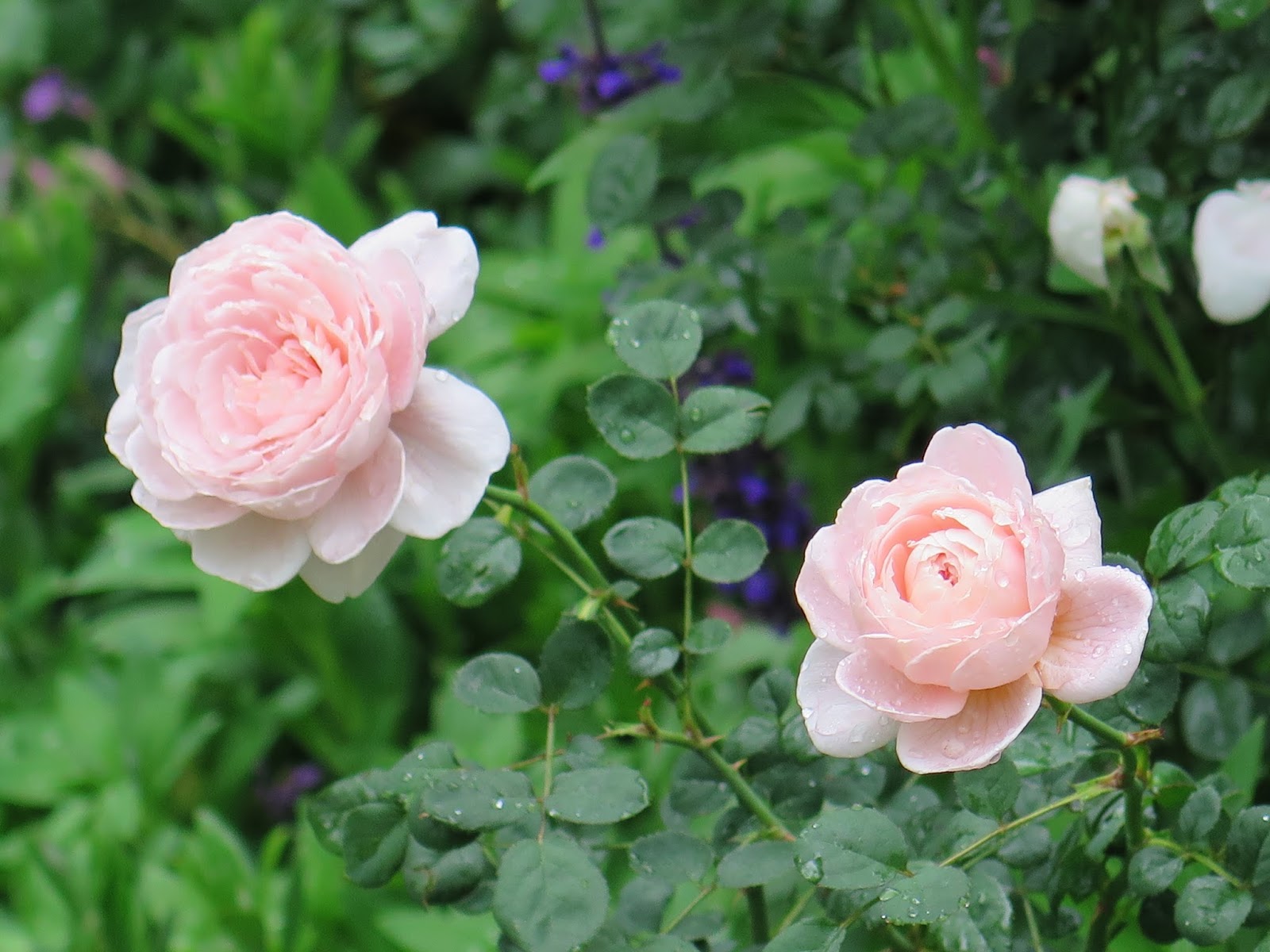
 The David Austin roses in the front garden are looking so good right now

 These graceful and frilly ones remind me of ballet tutus. It felt good to get back into photography; it  makes you look at the world differently. My goal is to bring my camera with me now wherever I go, not just my iPhone!

Planning our trip to London--


This was a great weekend to pull out my books and notes on London and decide what we want to do this time. I am thrilled to know that Kenneth Branagh's stage production of Romeo and Juliet will be playing at the Garrick Theatre and Swan Lake in the Round at the Royal Albert Hall.  I hope to see them both! There is always something new to do in London...

Learning about this artist--

The New York Review of Books has a great article on the French artist Elisabeth Louise Vigee Le Brun and I want to learn all I can about her before seeing this exhibition at the Metropolitan Museum in New York.


Doing a little research and mulling over a fascinating lecture by Hermione Lee from last week--
I went to a fabulous event last Thursday in Pasadena. It was a lecture by renowned English biographer Dame Hermione Lee. My friends and I got a chance to meet her and say how much we enjoyed her biography of Edith Wharton. She was lovely. She has also written biographies of Virginia Woolf, Penelope Fitzgerald, and Willa Cather. Her topic that evening was "Gardens of the Mind: Writers, Gardens and Biography." Did you know that American writers such as Edith Wharton and Willa Cather featured only European-inspired gardens in their books? This was all the rage at the time. She talked about the "cross-cultural garden moment at the turn of the twentieth-century." I dipped into her Edith Wharton biography this weekend in preparation for my book club's discussion of The House of Mirth later this week. What a treasure trove that book is!

And after the rain--

 Joseph's Coat rose climbing on our porch

The sun is shining today and there is no better way to start the week than in the garden. It was a cozy and productive weekend. The rain was great and so beneficial for our gardens. The peak of the season is right around the corner. Don't forget to get your tickets for the Robinson Gardens Tour on May 14. It's going to be fabulous this year!

April showers really do bring May flowers!

Monday, March 28, 2016

Celebrating Shakespeare


"To thine own self be true, and it must follow, as the night the day, thou canst not then be false to any man."
-- William Shakespeare

Did you know that this year is the 400th anniversary of Shakespeare's death? It's hard to imagine a world without Shakespeare. He gave us so many riches -- language, poetry, drama, love stories, tragedies, comedies, and countless memorable characters. His plays continue to captivate us. There are celebrations occurring all around the world to mark the anniversary. Here in the states, the Folger Shakespeare Library in Washington, D.C. will be the most exciting place to celebrate the Bard. The Wonder of Will: 400 Years of Shakespeare will celebrate Shakespeare and his extraordinary legacy through lectures, exhibitions, special events, and performances throughout the year. The First Folio, which is the book that gave us Shakespeare, is going on the road and will be traveling all around the country. Go here to see the schedule. This precious tome will make an appearance in California in June at the Old Globe Theatre in San Diego. I hope to make it there! Here are some highlights of what is happening at the Folger:

1) "Shakespeare, The Story of an Icon": Despite the fact that there are no photographs of Shakespeare or recordings of his voice, this exhibition creates a vivid portrait of the man through a stunning array of documents from his own lifetime. Go here to see a fantastic time-lapsed installation of this exhibition.

2) "Shakespeare's Life Stories": a lecture by renowned Shakespeare scholar Stephen Greenblatt.

3) "Shakespeare Unlimited": a series of podcasts by scholars exploring why Shakespeare's stories still resonate. They examine how the works, written so long ago, still speak to us today. I have listened to a couple of these and they are fascinating.

Go here to learn more.


And in Britain...

As you can imagine they are going all out in England. Lectures, performances, exhibitions, screenings, you name it. The schedule really is impressive. Go here to learn all that Shakespeare 400 has planned. Some highlights:

1) Exhibitions: "Shakespeare in Ten Acts" at The British Library. This will be a landmark exhibition on the making of an icon, charting Shakespeare's constant reinvention across the centuries.

2) Performances: "Much Ado About Nothing" in London. This production is set in 1945 at the end of World War II.

3) Talks: "The Grace of Plants: Shakespeare and Botany" at the Southwark Cathedral

4) Talks: "Shakespeare on Film." This series of talks will explore the inspirational influence of Shakespeare on filmmakers across the world, featuring films from the silent era, award-winning adaptations and contemporary interpretations of the Bard's work.

Go here to learn more.


Lily James and Richard Madden in the upcoming production of Romeo and Juliet

This summer Kenneth Branagh is directing a production of Romeo and Juliet in London starring Lily James, Richard Madden, and Derek Jacobi. This should be fabulous. Go here to learn more.


Ralph Fiennes in "The Tempest," 2011

I began to think about the memorable live performances of Shakespeare I have seen over the years. Here are a few that were breathtaking:

The Tempest with Ralph Fiennes at Theatre Royal Haymarket in London
A Midsummer Night's Dream with Kenneth Branagh and Emma Thompson at the Mark Taper Theater in Los Angeles  
King Lear at the Ashland Shakespeare Festival in Oregon
Much Ado About Nothing at the Globe Theater in London
Othello at UCLA in Los Angeles

I also adore Prokofiev's ballet of Romeo and Juliet and see it whenever I have a chance.

And there have been so many beautiful film adaptations -- Zeffirelli's Romeo and Juliet and Kenneth Branagh's Much Ado About Nothing, Hamlet and Henry V. Kenneth Branagh has given us many great Shakespeare productions, both on film and on the stage. His upcoming stage production of Romeo and Juliet will continue the tradition.


By the way, researching this blog post was a perfect example of falling down the rabbit hole of the Internet. But it turned out to be a good thing. After sitting in awe (and feeling a bit overwhelmed!) as page after page of links on the 400th anniversary of Shakespeare came up, I whittled it down to a few that looked fabulous. I then saw one from the Huffington Post which I almost skipped. Thank goodness I clicked that one as it led me to the discovery that right here in Los Angeles there will be a fabulous one night only performance An Evening of Shakespeare: Murder, Lust, & Madness  in honor of the anniversary. If you live in L.A. and love the Bard, be sure to get a ticket before it sells out. This should be amazing!

I hope all this whets your appetite for attending some of these wonderful events in honor of the 400th anniversary of Shakespeare. It should be a glorious year-long celebration and a look into why Shakespeare continues to matter. It is sure to remind us of why the Bard still inspires, enlightens and entertains!