Showing posts with label Edith Wharton. Show all posts

Tuesday, August 19, 2014

A Thousand Little Daily Wonders...

Edith Wharton

This summer biographies have taken over my study. I have been reading about some very inspiring women: Vita Sackville-West, Virginia Woolf and Edith Wharton, to name a few. Their stories are as thrilling as any of their novels. They were visionaries and adventurers, original thinkers and risk-takers. Recently I have been reading about one of the most fascinating: Edith Wharton. Her intellect, energy, and lifelong curiosity were legendary. She was a master storyteller, chronicler of American society, and a supremely gifted writer. This woman was a force to be reckoned with.

Here are some of the highlights:

1866: At age four, the American writer Edith Wharton was taken by her parents for an extended visit to Europe where they stayed until 1872. By the time she was 18 she had lived half her life in Europe and could speak four languages.

1897: Her first book, The Decoration of Houses, written with the Boston architect Ogden Codman, was published by Scribners. Wharton was as passionate and knowledgeable about architecture and interior design as she was about writing novels. Hugely successful, this book had a major impact on interior design both in America and Europe.

1901: Edith purchased a 113-acre property in Lenox, Mass. and began building The Mount, a classical estate modeled after Belton House in England. Edith designed and supervised the building of the house and gardens, using what she had learned from her years of living in Europe. She lived there from 1902-1911. During that time, she entertained many prominent writers, artists and politicians including President Theodore Roosevelt, writer Henry James, diplomat Walter Berry, landscape designer Beatrix Ferrand and sculptor Daniel French. And it is where she wrote The House of Mirth.

1904: Her book Italian Villas and Their Gardens was published. This was a series of articles on Italian architecture and gardens commissioned by Century Magazine. She traveled to Italy and drove all around the countryside looking at villas and doing extensive research. The articles came out in book form with illustrations by her friend the artist Maxfield Parrish.

1905: Her novel The House of Mirth was published in serial form. When it came out in book form, it was an instant bestseller and stayed on the bestseller list until 1906. It established Edith Wharton as America's most admired writer.

1911: She left the Mount for good and moved to France where she lived for the rest of her life. When World War I broke out, Edith put aside her writing and became involved in the war efforts.

1915: She organized the Children of Flanders Rescue Committee to aid Belgian orphans during the war. She also worked to aid tubercular soldiers and visited front lines and battle areas with her lifelong friend Walter Berry.

1916: She was recognized by France for her war efforts and made a Chevalier of the Legion of Honor, the highest honor that France could award any civilian. She was recognized for "having given all possible assistance to refugees from those areas of France and Belgium invaded by the enemy."

1920:  Her 12th novel The Age of Innocence was published and awarded the Pulitzer Prize.

1923:  She was the first woman to be awarded an Honorary Doctorate of Letters by Yale University

1937:  By the time of her death she had written over a dozen works of non-fiction (design, architecture, travel, memoirs) as well as at least 40 books of fiction (novels, novellas, and short stories). Some of the most famous are: The House of Mirth, Age of Innocence, Ethan Frome, The Custom of the Country, Summer, The Buccaneers, and Old New York.


At age 74 she called herself "an incorrigible life-lover and life-wanderer and adventurer." 

She mused about "this wonderful adventure of living." 

She wrote in her memoir:

"Life is the saddest thing there is, next to death; and yet there are always new countries to see, new books to read, a thousand little daily wonders to marvel at and rejoice in..." 


FASCINATING DETAIL:  She spent the mornings writing in bed, tossing the pages onto the floor for her secretary Anna Bahlmann to type.


LOVE OF HER LIFE:  Walter Berry. Although she had a short love affair with Morton Fullerton during the final years of her marriage to Teddy Wharton, she called Walter Berry "the love of all my life."

Curious and always interested in the world, Edith Wharton lived a full life. She was an adventurer, brilliant and bold, unafraid to take risks and tackle big projects. Luckily for us, she wrote many literary masterpieces that will live on forever. They speak to us because she was so wise about the human heart. Everyone can relate to the heartbreak she describes. She also built The Mount, another creation that will live on forever and a place we can visit and feel her presence. If you haven't been and find yourself in Lenox, Massachusetts, be sure to visit! Go here to find out more.

Now I need to find out about Walter Berry, the "love of all her life"?!! Who exactly was he? 

I would love to know which women writers inspire you?

Monday, March 18, 2013

A Great Book and Spring Flowers

Old New York in the Gilded Age -- the setting for "The Custom of the Country" by Edith Wharton
Photo via here

Last week, as winter was giving way to spring and wisteria and camellias were blooming all over Los Angeles, I found myself staying in on Wednesday in order to finish The Custom of the Country by Edith Wharton.  Have you read it?  If you haven't, stop what you are doing right now and get your hands on a copy of this book.  Trust me, you are in for a treat.  The heroine, or anti-heroine of the book, Undine Spragg is one of the most deliciously evil characters you will ever read about.  She is the ultimate social climber and the extent of her scheming selfishness is so vast as to be fascinating.  The story of her rise from a small-town Midwestern girl to a French countess will make your jaw drop.   This tale of old New York society clashing with the upstart American middle class is one of Wharton's very best books. Undine is one of the "bad girls" of literature who, like Becky Sharp and Emma Bovary, has no conscience and doesn't care whose life she destroys on her way to the top.  This is a compulsive read -- a great book and a thoroughly enjoyable one.   Reading it is a reminder of Edith Wharton's impressive talent -- she was a masterful storyteller, insightful chronicler of American society, and a supremely gifted writer.

Edith Wharton

Undine Spragg is an American beauty from the Midwest who is determined to move up in the world.  She convinces her parents to take her to New York where she plans to seek her fortune.  She is a force of nature and a manipulator, a beautiful woman who knows the power of her beauty and how to use it.  She somehow manages to get everyone to bend to her will.  Men fall in love with her.  But New York is a hard nut to crack and unlike Lily Bart and Newland Archer, the protagonists of The House of Mirth and The Age of Innocence who are born into society, Undine is an outsider.  She is searching for a way into New York's upper echelons and it takes her a while to figure out how to gain entree into this new world.

She sets her sights on the aristocratic, young Ralph Marvell who is from an old and respectable New York family.  His family is horrified when Ralph falls under the spell of Undine's beauty and marries her.  Because she is unsophisticated and naive, Undine thinks that marriage to Ralph will be the key to her success.  But she has no understanding of the intricacies and unspoken rules of the world she has married into and doesn't realize that Ralph is cash-poor.  Although he has a law degree, he has no desire to work and is content to spend his days reading and writing poetry.  Like most men of his class, he is without a profession and dislikes the subject of making money.  They have a son, but motherhood brings Undine no happiness and she begins to look around for a better life.


And so begins her endless pursuit of wealth and position in the world, by making one strategic marriage after another. Only later will Ralph find out that Undine had previously been married before she married him;  he is devastated not only because this discovery is a symbol of Undine's dishonesty to him throughout their marriage, but also because divorce was a social stigma in New York society.  As it turns out, divorce will be a way of life for Undine as she endlessly searches for happiness throughout the years.  Her trajectory will take her to Paris and the inner circles of French aristocracy.  You will be surprised to see who she winds up with by the book's end.   Because she equates happiness with material possessions, she will never be happy.  But this is a lesson she never learns, as she is one of Wharton's most unenlightened heroines.   

You will love this novel about one of the great female villains in literature and enjoy watching her make her way in the world --  lying, cheating, and charming her way to the top.  Undine Spragg is one of literature's most memorable characters and "The Custom of the Country" is one of Wharton's most enjoyable and unforgettable books.  Don't you love it when you find a book that you can't put down?

********

The first day of spring is on Wednesday.  Here are some flowers from Hollyflora to get you in the mood...


And camellias from the garden!

Friday, October 12, 2012

Autumn Afternoons

The Berkshires in western Massachusetts
Photo via here


"The afternoon was perfect.  A deeper stillness possessed the air, and the glitter of the American autumn was tempered by a haze which diffused the brightness without dulling it.
  
In the woody hollows of the park there was already a faint chill; but as the ground rose the air grew lighter, and ascending the long slopes beyond the high-road, Lily and her companion reached a zone of lingering summer.  The path wound across a meadow with scattered trees; then it dipped into a land plumed with asters and purpling sprays of bramble, whence, through the light quiver of ash-leaves, the country unrolled itself in pastoral distances.

Higher up, the lane showed thickening tufts of fern and of the creeping glossy verdure of shaded slopes; trees began to overhang it, and the shade deepened to the checkered dusk of a beech-grove.  The boles of the trees stood well apart, with only a light feathering of undergrowth; the path wound along the edge of the wood, now and then looking out on a sunlit pasture or on an orchard spangled with fruit.

Lily had no real intimacy with nature, but she had a passion for the appropriate and could be keenly sensitive to a scene which was the fitting background for her own sensations.  The landscape outspread below her seemed an enlargement of her present mood, and she found something of herself in its calmness, its breadth, its long free reaches.  On the nearer slopes the sugar-maples wavered like pyres of light; lower down was a massing of grey orchards, and here and there the lingering green of an oak-grove.  Two or three red farm-houses dozed under the apple-trees, and the white wooden spire of a village church showed beyond the shoulder of the hill; while far below, in a haze of dust, the high road ran between the fields." 

Lily dropped down on the rock, glowing with her long climb.  She sat quiet, her lips parted by the stress of the ascent, her eyes wandering peacefully over the broken ranges of the landscape.  Selden stretched himself on the grass at her feet, tilting his hat against the level sun-rays and clasping his hands behind his head, which rested against the side of the rock.  He had no wish to make her talk; her quick-breathing silence seemed a part of the general hush and harmony of things.  In his own mind there was only a lazy sense of pleasure, veiling the sharp edges of sensation as the September haze veiled the scene at their feet.  But Lily, though her attitude was as calm as his, was throbbing inwardly with a rush of thoughts.  There were in her at the moment two beings, one drawing deep breaths of freedom and exhilaration, the other gasping for air in a little black prison-house of fears.  But gradually the captive's gasps grew fainter, or the other paid less heed to them: the horizon expanded, the air grew stronger, and the free spirit quivered for flight."  --  Edith Wharton, The House of Mirth


Wishing you a beautiful autumn weekend!

Monday, September 17, 2012

A Library to Love

Edith Wharton's library at The Mount
Photo via here

There has been a lot of news about Edith Wharton lately.  Have you noticed how much attention she is getting?  There are several new books about her and a glamorous photo spread in Vogue magazine (the September issue!).  The attention is not surprising considering that this year is the 150th anniversary of her birth.  And now her home in western Massachusetts is the subject of a new book. Edith Wharton's beautiful library (above) at the Mount, the home she designed and lived in during the early part of the twentieth-century, is featured in a new book that has just been published -- "Edith Wharton at Home: Life at the Mount" by Richard Guy Wilson.


Photo via here

Wharton was as passionate and knowledgeable about architecture and interior design as she was about writing novels. In fact, her first book was "The Decoration of Houses" which she wrote with the architect Ogden Codman, Jr.  It was a book that was critical of Victorian design excesses and promoted a return to classical principles like symmetry. Anyone who is a fan of Edith Wharton's fiction knows that descriptions of her characters' homes and environments are a big part of her books.  We sink contentedly into these environments as we become engrossed in her books.  I love the description of Lawrence Selden's library in "The House of Mirth" when Lily Bart makes her unwise and unchaperoned visit to the bachelor's home.  I feel as if I could walk right into that room, which is how I often feel in my favorite books by Wharton.

"He ushered her into a slip of a hall hung with old prints.  She noticed the letters and notes heaped on the table among his gloves and sticks;  then she found herself in a small library, dark but cheerful, with its walls of books, a pleasantly faded Turkey rug, a littered desk, and, as he had foretold, a tea-tray on a low table near the window.  A breeze had sprung up, swaying inward the muslin curtains, and bringing a fresh scent of mignonette and petunias from the flower-box on the balcony."

That is the kind of library I want.  But Edith Wharton's library at the Mount is a much grander room than Lawrence Selden's cozy library in "The House of Mirth."  It is a beautiful space with bookshelves made out of oak and two doors opening up to the terrace.  And it needed to be grand for it was the room where Wharton would entertain her guests -- which included her good friend the writer Henry James, Theodore Roosevelt, the diplomat Walter Berry, writer and painter Maxfield Parrish and landscape designer Beatrix Farrand --  for drinks and conversation before and after dinner. And when you consider that it now contains Edith Wharton's personal collection of books which were returned to the Mount from Europe in 2006, it is a very special room.

Photo via here

Do you enjoy visiting writers' houses?  It is one of my favorite things to do when I am traveling.  A trip to the Berkshires for me has to include a visit to Edith Wharton's home.  In fact, the first time I was there was about fifteen years ago when the house was not yet fully restored and was the home for a theatrical group that staged Henry James' novella "The Turn of the Screw."  Seeing this ghost story  performed in Wharton's home around Halloween was an amazing experience!

The best writers' houses are autobiographical, giving us insight into the person.  The Mount is such a house.  It reveals so much about Edith Wharton.    Every aspect of the estate -- including its gardens, architecture, and interior design -- reflects her spirit.  We sense her presence as we walk through the rooms.   This is where she lived, wrote, and entertained her circle of friends which included some of the most prominent writers and artists of the day.  It contains the bedroom where she wrote "The House of Mirth," writing the book in bed each morning and tossing the pages onto the floor for her assistant to pick up and type.

********


The library at the Mount, as it was recently photographed for Vogue magazine

And what about Edith Wharton's recent "star" turn in Vogue magazine?  Did you see it?  Wharton and the Mount (with a great scene shot in the library) were featured in the September issue of Vogue magazine.  This gorgeous article and photo spread photographed by Annie Leibovitz and styled by Vogue's art director Grace Coddington on the grounds of the Mount has created a huge buzz.  The article (written by Colm Toibin) tells the story of Edith's love affair with Morton Fullerton, the American expatriate journalist.  Wharton's good friend Henry James was also in love with him. The photos form a gorgeous visual accompaniment illustrating the literary life and love story of Edith Wharton. Everyone who read it was thrilled that the photos featured writers, actors, and artists of today playing Edith's inner circle of friends, including writer Jeffrey Eugenides as Henry James and writer Jonathan Safran Foers as architect Ogden Codman.  One of the scenes was shot in the library (photo above) with actor Jack Huston (from HBO's "Boardwalk Empire") playing Morton Fullerton, model Natalia Vodianova as  Wharton, and Jeffrey Eugenides as Henry James.  Go here to read more.

********


Photo via here

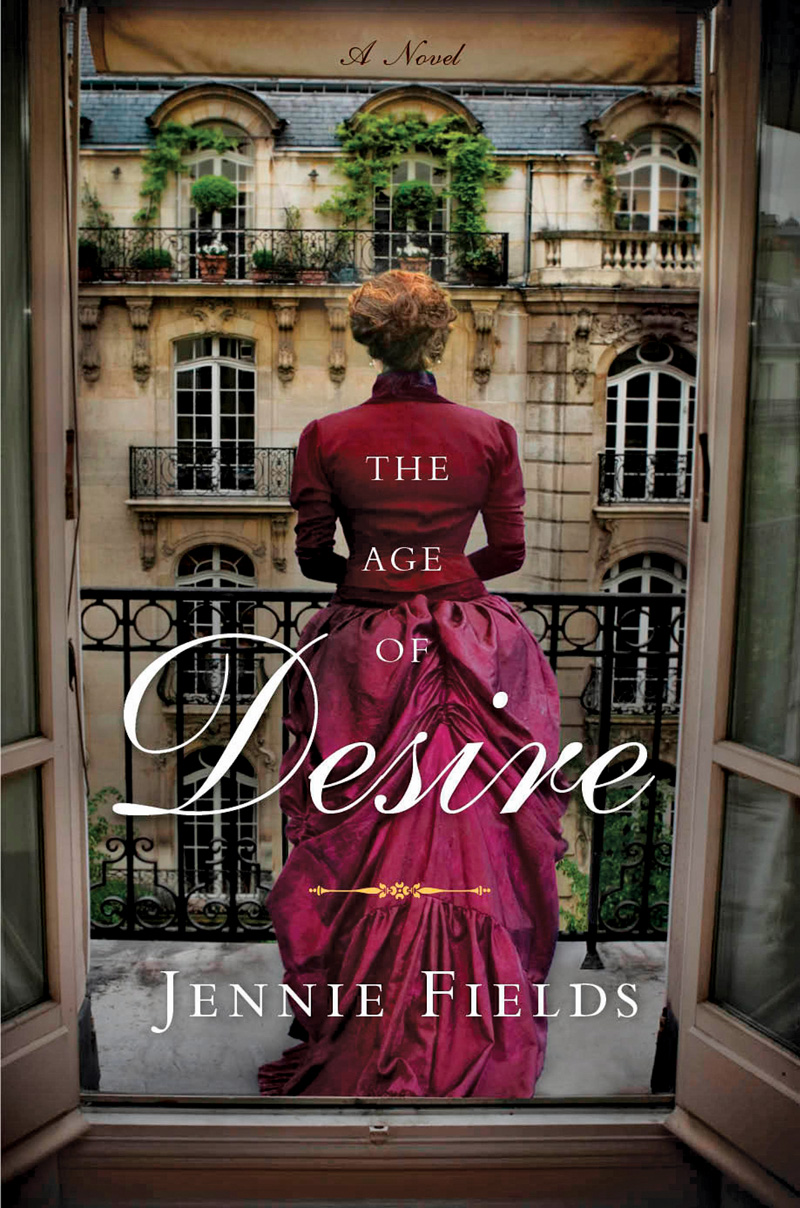
There is also a new novel about Edith Wharton's life written by Jennie Fields.  In "The Age of Desire" Fields tells the story of Wharton's life through two points of view:  Wharton's own and that of her literary secretary and confidante Anna Bahlmann.  The book recreates Wharton's turn of the century world which consisted of Paris, her country estate in western Massachusetts, and Henry James home in Rye, New York.  I just picked up a copy of this book and can't wait to immerse myself in Edith Wharton's world, as well as read about her love affair with Morton Fullerton and her relationship with Anna Bahlmann.  Apparently, when she was with Fullerton, Wharton revealed a side of herself -- vulnerable and passionate -- that she didn't show to most people.  Henry James, despite his conflicted feelings regarding Fullerton, encouraged her to have the affair.  The story sounds as intriguing as any of her novels.

By the way, now that we are all becoming more familiar with Edith Wharton's life through the new books and articles about her, I wonder if someone will make a movie out of it.  What do you think?  Vogue magazine may have gotten the ball rolling with its luscious reimagining of Wharton's life at the Mount.  It had the feel of a small costume drama. Hmmm...who could play Edith Wharton?  Maybe two actresses, one playing Wharton as a young woman in her twenties, and one playing her later in life, perhaps in her forties.  Rebecca Hall and Emma Thompson?   Just a thought...the casting would be so much fun!

Saturday, August 11, 2012

Edith Wharton in Vogue Magazine


The September Issue of Vogue Magazine has just hit the stands and it includes a fascinating essay on Edith Wharton written by Colm Toibin and a gorgeous photo spread by Annie Leibovitz shot at The Mount, Edith Wharton's home in Lenox, Massachusetts. This really is Edith Wharton's year!  It is the 150th anniversary of her birth, there are celebrations all over the country, especially at The Mount, and now she's in Vogue.   Shot on the grounds of the beautiful Berkshire retreat that Wharton designed and lived in from 1903 until 1908, these photos taken by photographer Annie Leibovitz and styled by Vogue's creative director Grace Coddington capture the gracious beauty of this autobiographical home and its grounds.  It is truly one of this country's historical and literary treasures.  President Theodore Roosevelt, diplomat Water Berry, writer Henry James, and sculptor Daniel Chester French were all part of Wharton's inner circle and came to stay with her there.  If you get a chance to visit this area of western Massachusetts (a great destination with Tanglewood nearby and the Williamstown Theatre Festival not faraway), be sure to visit The Mount.  The house and the gardens are magnificent and it is where Edith Wharton wrote her masterpiece "The House of Mirth."

Natalia Vodianova plays Edith Wharton and actress Juno Temple plays Edith's secretary Anna Bahlmann

This story in Vogue is a beautiful and creative piece and one of the best magazine layouts I have seen in a long time. The art direction and styling are simply brilliant.  Entitled "Custom of the Country," it recreates Edith Wharton's inner circle by casting writers, artists and actors of today such as Jeffrey Eugenides, Elijah Wood, Jack Huston, Mamie Gummer, and Juno Temple to play Wharton's friends and colleagues who would have spent time with her at the Mount. These romantic and evocative vignettes include vintage cars, costumes, and even current Edwardian fashions off the runway.  I am wondering if "Downton Abbey" influenced some of the designers this year.

Writer Jeffrey Eugenides plays Henry James; actor Elijah Wood plays Wharton's chauffeur; and actor Jack Huston plays Morton Fullerton, the man whom Wharton loved

Near the Mount is Chesterwood, the home and studio of sculptor Daniel Chester French, played here by artist Nate Lowman

This scene recreates a picnic between Henry James, Morton Fullerton and Wharton

Wharton's niece landscape designer Beatrix Farrand, played here by actress Mamie Gummer; diplomat Walter Barry, played by writer Junot Diaz; architect Ogden Codman Jr., played by writer Jonathan Safran Foer; and painter Maxfield Parrish, played by actor Max Minghella

********

Pick up this issue -- if you are a fan of Edith Wharton you will love the way her life at the Mount has been reimagined by Annie Leibovitz and Grace Coddington in the pages of Vogue.