Showing posts with label Virginia Woolf. Show all posts

Monday, October 24, 2016

A Virginia Woolf Kind of Day


There are times when the perpetually blue skies and sunny weather of Los Angeles make me very happy. In fact, I would say that is the case most of the time. But there are also times when my mood craves "a scene of wet lawn and storm-beat shrub, with ceaseless rain sweeping away wildly before a long and lamentable blast" as Charlotte Bronte described in "Jane Eyre." This is the kind of weather that necessitates staying indoors and for me that means curling up in front of a roaring fire and reading. Or writing. Or maybe just daydreaming. There is something about the darkness of English skies that feels conducive to inner life. It may be confining, but there can be pleasure in confinement. And conversely there is the sense of promise and gratitude that comes when the skies finally clear and we can go outdoors. Something about those contrasts makes life seem a little more vivid.

Yesterday was one of those days. The sky was filled with dark clouds throughout the morning, making it truly feel like fall. The sun peeked in and out all afternoon, the temperature was in the sixties, and it was the perfect day to get some reading done.  Later that evening it rained. Fortunately I had a delightful assignment in front of me. My garden book club has turned out to be a very interesting group. We meet every other month to discuss garden books. However, as with most literature, one things leads to another and garden books have taken us in unexpected directions. For example, many of the gardens we read about belonged to writers. And so we've had some great discussions about Edith Wharton's garden and "The House of Mirth," Vita Sackville-West's garden and "All Passion Spent," and now Virginia Woolf's garden and "Mrs. Dalloway."

Yesterday I started reading "Virginia Woolf's Garden." This book is very special to me because I have visited Virginia Woolf's garden at Monk's House, Virginia and Leonard's country retreat in Sussex (go here to read more). It is a modest house filled with atmosphere and reminders of the lives lived there: the sitting room painted in Virginia's favorite shade of green (despite her sister Vanessa's disapproval) where the Bloomsbury Group would gather for late night conversation, the dining room chairs with their needlepoint cushions stitched by Duncan Grant's mother, and Virginia's bedroom filled with her beloved books and a mantlepiece decorated with a lighthouse painted by her sister Vanessa. The garden is the biggest surprise. It was Leonard's gift to Virginia, a haven where they could both relax and she could work on her books. From the overgrown land behind the house, they created a brilliant patchwork of garden rooms, linked by brick paths, secluded behind flint walls and yew trees. Virginia wrote most of her major novels at Monk's House. She worked in a little writing hut nestled into a corner of the orchard. She could often be seen walking the grounds as she spun her narratives and created her characters.

The Foreward to "Virginia Woolf's Garden" was written by Cecil Woolf, Leonard's nephew. He recalls a time before the Second World War when he stayed at Monk's House with his uncle and aunt. He spent an entire weekend there and remembers arriving, pushing open the creaking wooden gate, and being greeted by Leonard and his pack of excited dogs. Virginia, interrupted by the barking of the dogs, came strolling across the lawn from her little writing cabin. He writes,

"It would take an horticultural epic -- for which my abilities as a poet and my knowledge as a gardener are unequal -- to do full justice to the little Eden I remember. Leonard and Virginia had no children: their books and garden were their children. My recollections of the garden are inevitably somewhat impressionistic. From the overgrown land behind the house that the Woolfs bought twenty years earlier, they had created a spectacular mosaic of brightly coloured flowers...merging into vegetables, gooseberry bushes, pear trees, apple trees, figs. Here and there on the lawn were scattered goldfish ponds. Beside the flower garden and orchard, there were the beehives and the greenhouses, where Leonard had an extensive collection of cacti and succulents. Unlike the grand and formal gardens at Sissinghurst, created by Virginia's close friend Vita Sackville-West, the Woolf's garden was organic, delightfully informal and less self-conscious."

This book is written by Caroline Zoob who lived with her husband at Monk's House for over a decade as tenants of the National Trust. During those years they tended and planted the garden as other tenants had done before them. She tells the story of how the garden has evolved since 1919, when the Woolfs bought the house, to the present day. I have read that this book will appeal equally to gardeners as well as those with an interest in Virginia and Leonard Woolf. I'm looking forward to reading it alongside "Mrs. Dalloway." It should be interesting to learn about this magical garden that formed a safe haven and inspiring environment for Virginia as she wrote one of her masterpieces. For the next two weeks I will be immersed in the world of Virginia Woolf and I am looking forward to my book group's discussion of one of my favorite authors and her garden.

Wednesday, July 13, 2016

Bloomsbury News

The studio at Charleston

After all these years the Bloomsbury Group continues to inspire. Charleston, the country retreat of its members, was a hive of writing and art. The artists who lived there painted and decorated every surface of the house -- the walls, cupboards, doors and mantelpieces -- and created a magical place. Its beauty inside and out, as well as the artists and writers who lived there, have been a source of inspiration to so many. Here are a few exciting Bloomsbury-related arts events that are happening right now! 

"The Other Room" by Vanessa Bell 

The Dulwich Picture Gallery in London will be hosting a Vanessa Bell art exhibition, her first major solo show. Most people know Vanessa as the sister of Virginia Woolf, the husband of Clive Bell, the lover of Duncan Grant and the doyenne of the Bloomsbury set. But many people don't realize what an accomplished artist she was. The curators of the exhibition at Dulwich are making it very clear that she was a talented artist who deserves a show of her own. Oh, how I would love to be in London for this one!

Virginia Woolf and Vita Sackville-West, the subjects of a new film based on Eileen Atkins' play Vita and Virginia

Eileen Atkins' play Vita and Virginia about the friendship and affair between the writers Virginia Woolf and Vita Sackville-West is finally going to be made into a film. The relationship between the two literary luminaries began in 1922 and lasted around a decade. They remained friends until Woolf's death in 1941. Woolf dedicated her novel Orlando to Vita, a book that has been called "the longest and most charming love letter in literature."

A fan designed by Duncan Grant

David Herbert has curated a fascinating exhibition A Room of Their Own: Lost Bloomsbury Interiors 1914-30 at the Victoria Gallery in Bath, England. It brings together rarely seen pieces of fine and decorative art to recreate the essence of lost Bloomsbury spaces. So many of these rooms no longer exist, but fragments still remain. Charleston is the only significant example of a Bloomsbury home to survive. After years of searching for furniture, ceramics, fabric, sculpture and paintings, he has reassembled many Bloomsbury interiors. He has collected pieces by Roger Fry, Vanessa Bell and Duncan Grant to create an intimate look at the domestic lives of these artists.

David Herbert's Bloomsbury Ceramics

David Herbert has also created a line of Bloomsbury-themed ceramics decorated with foliage and flowers inspired by Duncan Grant's and Vanessa Bell's own designs. Go here to view. I can't wait to order some of these!


And one more thing -- a restaurant! The Dalloway Terrace, named after Virginia Woolf's famous book, has opened in the heart of Bloomsbury. It serves breakfast, lunch and dinner. The menu for its afternoon tea was inspired by the Bloomsbury group. This restaurant looks lovely and I have read only good reviews!

Monday, January 4, 2016

New Year, Old Book


Happy New Year! I hope you had a wonderful holiday season. The week between Christmas and New Year's is always a good one for browsing through books received as gifts. Or those bought as Christmas presents for yourself, which is what happened in the case of my favorite. It is a lovely old English edition of Quentin Bell's biography of Virginia Woolf. The book was published in England in two volumes and this is the second one, covering the years between 1912-1941. It is subtitled "Mrs. Woolf." I bought this biography back in the early seventies when it was first published. I read it from cover to cover and probably owe my passion for Virginia Woolf and her writing to this book. My original copy is pretty tattered from all the reading and underlining and not particularly attractive. I was thrilled when I found this gorgeous edition published in England in 1973 by the Hogarth Press. And that photo is so beautiful and expressive.

Here is a little background on why this book was so important at the time. Shortly before his death Leonard Woolf invited Virginia's nephew Quentin Bell to write her biography and gave him access to all her private documents including the diaries which she kept for most of her life. In addition he had access to important archives, letters, memoirs, and unpublished works of fiction by Virginia Woolf that no one else had seen. Because of all this new material, and of course Quentin Bell's excellent writing, the book was groundbreaking and gave the first realistic portrait of this remarkable woman.

As I looked through the book I was reminded of some of the milestone events in her life. They still take my breath away. Here are a few...

1912 -- The young and beautiful Virginia Stephen gets engaged to and marries Leonard Woolf. Just back from civil service in India, Leonard arrived in London at the age of 32. He was one of Thoby Stephen's closest friends and classmates from Cambridge and a member of the Apostles, the exclusive intellectual club at Cambridge. Bloomsbury friends and family such as Lytton Strachey and Vanessa Bell had long thought Leonard a good match for Virginia and strongly encouraged the engagement. In their opinion, he seemed to be the only person worthy of her as well as the only person equipped to love and care for this brilliant and fragile young woman.

1915 -- The publication of her first book "The Voyage Out." It received good reviews and was called  an original work of genius.

1917 -- She and Leonard buy a printing press and start the Hogarth Press. Their first publication was a book of two stories: "The Mark on the Wall" by Virginia and "Three Jews" by Leonard. Although it began as a hobby to relieve Virginia's stress, the Hogarth Press became a very successful business and published many renowned British authors such as T.S. Eliot, Katherine Mansfield and Vita Sackville-West.

1919 -- They buy Monks House in Sussex in order to have a country retreat near Virginia's sister Vanessa. Leonard designed a garden for Virginia and, as she earned more money from her books, they turned Monks House into a comfortable home. Both she and Vanessa hosted some of the most famous writers and artists of the time at their neighboring country retreats.

1922 -- Virginia meets Vita Sackville-West for the first time and is swept off her feet by this larger than life personality. She was fascinated by Vita's aristocratic background and spent time at Vita's ancestral childhood home Knole House. (Imagine Downton Abbey but bigger) This grand country house and estate would provide the inspiration for Virginia's later novel "Orlando." The novel was Virginia's gift to Vita who was unable to inherit Knole because she was a woman. Their friendship/affair had a huge impact on Virginia's life.

1925 - 1928 -- Virginia writes her three famous novels: "Mrs. Dalloway," "To the Lighthouse," and "The Waves." These books are considered her masterpieces. They put her on the map as one of the great modernists and, in many people's opinion, the most innovative writer of the twentieth-century. She became a literary celebrity and took part in the exciting arts and social scene that was happening in London in the twenties. She was even photographed for Vogue magazine.

1928 -- "Orlando" is published and becomes a turning point in Virginia's career as a successful novelist. It sold twice as many copies in the first six months as "To the Lighthouse" sold in its first year. She was finally making money and her brilliance was widely acknowledged. These were probably her happiest and most productive years.

1928 -- Virginia is a celebrity when she goes to Cambridge to read to the women's colleges two papers that will become "A Room of One's Own." This famous feminist book includes the line: "A woman must have money and a room of one's own if she is to write fiction."

Sometimes finding a beautiful copy of an old book can give it new life. This lovely edition made me go back and revisit a biography from long ago and the visit was definitely worthwhile.

By the way, did you watch the first episode of the final season of Downton Abbey last night?
There were Bloomsbury references! Edith shows her London flat to Rosamund and mentions writers she has met there such as Virginia Woolf and Lytton Strachey. This was the exact year that "Mrs. Dalloway" was published. Love finding these connections!

Wishing you a year of old and new books!

Tuesday, September 8, 2015

A Classic Novel and the Perfect Setting


Happy September!

What books are on your wish list for fall? Do the books you read change with the seasons? When the weather turns cooler I often want to read a classic novel and this month I chose "To the Lighthouse" by Virginia Woolf. Have you read it? If you haven't, you might want to give it a try.

You may ask, why read it now?

Well, there are so many good reasons. Interest in Bloomsbury and Virginia Woolf seems to be at an all-time high. Here is what has been going on recently, as well as what is coming up:


Charleston Farmhouse, the country retreat of the Bloomsbury Group, will have its 100th birthday next year. It was rented by Vanessa Bell in 1916 so that conscientious objectors Duncan Grant and David Garnett would have a place to work the land. Record crowds have visited this summer. I am sure that something special will be happening to celebrate the big anniversary next year!

This is also the 100th anniversary of the publication of Virginia Woolf's first novel The Voyage Out.  After all this time, she continues to be considered one of the most influential writers of the 20th century. She inspires writers, artists, readers and even ballet choreographers with her writing. Many works of art have been created as a result. For example:


A new ballet, Woolf Works, based on her fiction premiered last May at the Royal Opera House in London. It played to rave reviews. I saw this and it was truly amazing --  an original and beautiful ballet.


Last year the National Portrait Gallery in London hosted its first-ever Woolf exhibition which combined portraiture with biography. I was lucky enough to see this one also. It was an amazing visual experience and captured this multi-faceted woman so well. The most moving objects in the exhibition were the letters she wrote her sister and her husband before committing suicide and her walking stick which was found on the bank of the River Ouse near her Sussex home. 


This summer the BBC aired a drama about Bloomsbury, Life in Squares. I hope it reaches the U.S. sometime soon. Larger groups than ever visited Charleston this summer to see the setting for many of the scenes.


Priya Parmar wrote a biographical novel, Vanessa and Her Sister, about the early days of the Bloomsbury Group with a focus on Vanessa Bell and her sister Virginia Woolf. It is excellent. Luckily for those of us in Los Angeles, she will be speaking about Vanessa and Her Sister in October at the Beverly Hills Literary Escape. Go here to learn more.

And in the New York Times By the Book column this past weekend, in answer to the question "who is your favorite fictional heroine," the novelist Anne Beattie answered Mrs. Ramsay from To the Lighthouse. All of this made me realize that it was time to take a second look at this classic novel by Virginia Woolf.

********

To the Lighthouse is considered Virginia Woolf's masterpiece. She wrote it in 1925, shortly after finishing Mrs. Dalloway. Just as modernist artists like Cezanne were trying to do something different in painting, Woolf was trying to do something different in the novel. Her goal was to change its form and push the boundaries beyond what had been done in the past. She wanted to write a novel that could incorporate the disorder and haphazardness of life, the ebb and flow of our thoughts and feelings, and at the same time tell a good story.

And so we are in the heads of the main characters Mr. and Mrs. Ramsay, their family and friends, as we follow their thoughts and actions during their stay at the Ramsays' summer retreat. Woolf is exploring ideas and issues that were important to her and that many of us can relate to: the passage of time, the relation of the present to the past, memory, creativity, art, marriage, family, career versus motherhood, place as a muse, and the power of women. One critic at the time wrote about the book, "Nothing happens...and yet all of life happens." As always with Woolf, the language is beautiful.

She modeled the characters Mr. and Mrs. Ramsay on her own parents. The book revolves around the Ramsays' annual family gathering on the Isle of Skye off the coast of Scotland. Virginia wanted to evoke the ambiance of her childhood summers in Cornwall. With the character Lily Briscoe she explored the struggle within women to be artist, wife and mother. Was it possible to have it all? This was a question that haunted Virginia for most of her life. Mrs. Ramsay exemplifies the Victorian ideal of motherhood. Lily Briscoe represents the modern concept of the woman artist.

There are so many beautiful passages --

As Lily Briscoe struggles to finish her painting, she thinks:

"One wanted, she thought, dipping her brush deliberately, to be on a level with ordinary experience, to feel simply that's a chair, that's a table, and yet at the same time, It's a miracle, it's an ecstasy."

When one of the house guests returns for dinner, Mrs. Ramsay thinks:

It must have happened then, thought Mrs. Ramsay; they are engaged. And for a moment she felt what she had never expected to feel again -- jealousy. For he, her husband, felt it too -- Minta's glow; he liked these girls, these golden-redish girls, with something flying, something a little wild and harum-scarum about them, who didn't 'scrape their hair off,' weren't, as he said about poor Lily Briscoe, '...skimpy.' There was some quality which she herself had not, some lustre, some richness, which attracted him, amused him, led him to make favourites of girls like Minta. They might cut his hair for him, plait his watch-chains, or interrupt him at his work, hailing him (she heard them now), 'Come along, Mr. Ramsay; it's our turn to beat them now,' and out he came to play tennis." 

Everyone, including Lily, is in love with Mrs. Ramsay. She wields power as the matriarch of the family and is based on Virginia's own mother Julia Stephen.

 Upon finishing the book, Virginia's sister Vanessa Bell wrote:

"...in the first part of the book you have given a portrait of mother which is more like her to me than anything I could ever have conceived possible. It is almost painful to have her so raised from the dead."

In what is probably the most famous scene in the book, the family and guests gather around the dinner table to eat Mrs. Ramsay's famous Boeuf en Daube.

"Now all the candles were lit up, and the faces on both sides of the table were brought nearer by the candlelight, and composed, as they had not been in the twilight, into a party round a table, for the night was now shut off by panes of glass, which, far from giving any accurate view of the outside world, rippled it so strangely that here, inside the room, seemed to be order and dry land; there, outside, a reflection in which things waved and vanished, waterily."

Virginia Woolf wrote about this famous scene:

The dinner party is the best thing I ever wrote: the one thing that I think justifies my faults as a writer... I don't think one could have reached those particular emotions in any other way."


Where would I love to read this book? Recently, while drooling over the interiors on my favorite design site House and Garden UK, I spotted this room at Ham Yard Hotel in London. It looks like the perfect bookish spot for settling in with a cup of tea and a good book. It has some of the artsy and bohemian spirit of the Bloomsbury set. Don't you love those lampshades and fabric on the couch and armchairs? I could easily while away a few hours in this delicious room!

What's on your list this fall?
And what is your dream setting for reading a classic book?

Monday, June 15, 2015

Beautiful London

"What she loved: life, London, this moment of June." --  Virginia Woolf

I just returned from a wonderful two week trip to London and Scotland. This will require a few blog posts, so I'll start with London where we had beautiful weather. The end of May, beginning of June, is such a good time to see this city. As always, it was filled with so much inspiration, excitement, art, history and beauty. The weather was the icing on the cake!

Carlos Place, Mayfair

Because of the great weather we did a lot of walking, through some beautiful streets and green spaces of London.


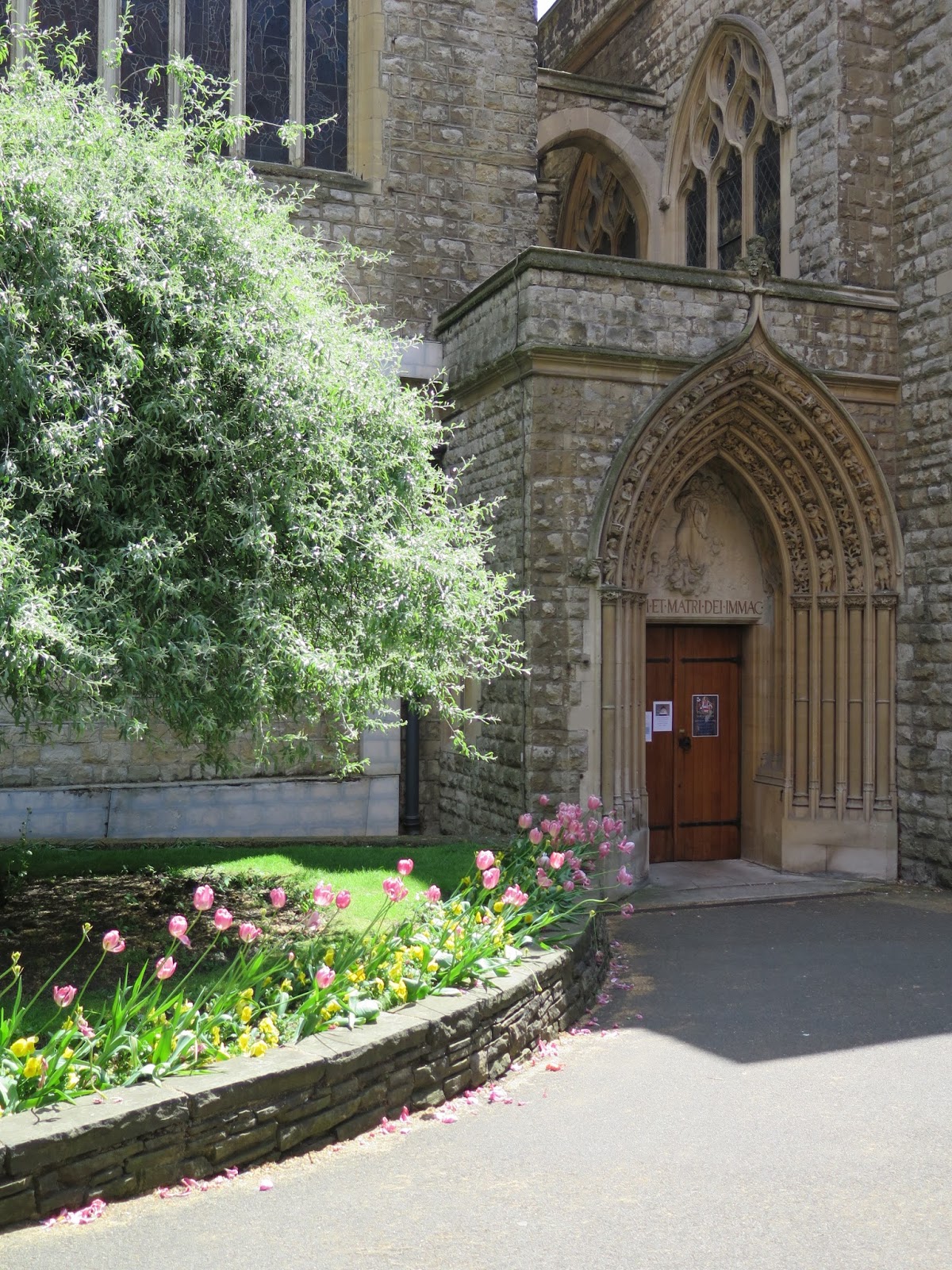
Discovering little out of the way places, like this church near the Connaught Hotel


And this park, Mount Street Gardens, next to the church


We stumbled upon Colefax & Fowler on Brook Street and were amazed to find this gorgeous garden at the back of the store.

A perfect little haven

And inside there was Nancy Lancaster's famous "yellow room"


The Royal Academy of Arts had a fabulous Richard Diebenkorn exhibition in its Sackler Galleries


And on this beautiful day, everyone was taking advantage of the sunshine


The National Gallery had the Inventing Impressionism show and the National Portrait Gallery had the John Singer Sargent, both of which were excellent. The portrait of the Victorian actress Ellen Terry dressed as Lady Macbeth and painted by Sargent took my breath away! The audio narrative on this was great. Apparently the spectacle of her arriving at Sargent's studio drew many visitors, including Oscar Wilde, who watched her being painted.


That day there was an organized run that went past Trafalgar Square, which was very exciting to see!


We went to the Wallace Collection for the first time where we were bowled over by the beauty of the place. This historic London town house sits on its own little square and is filled with old masters by English, French and Dutch artists.

Each gallery is a little gem


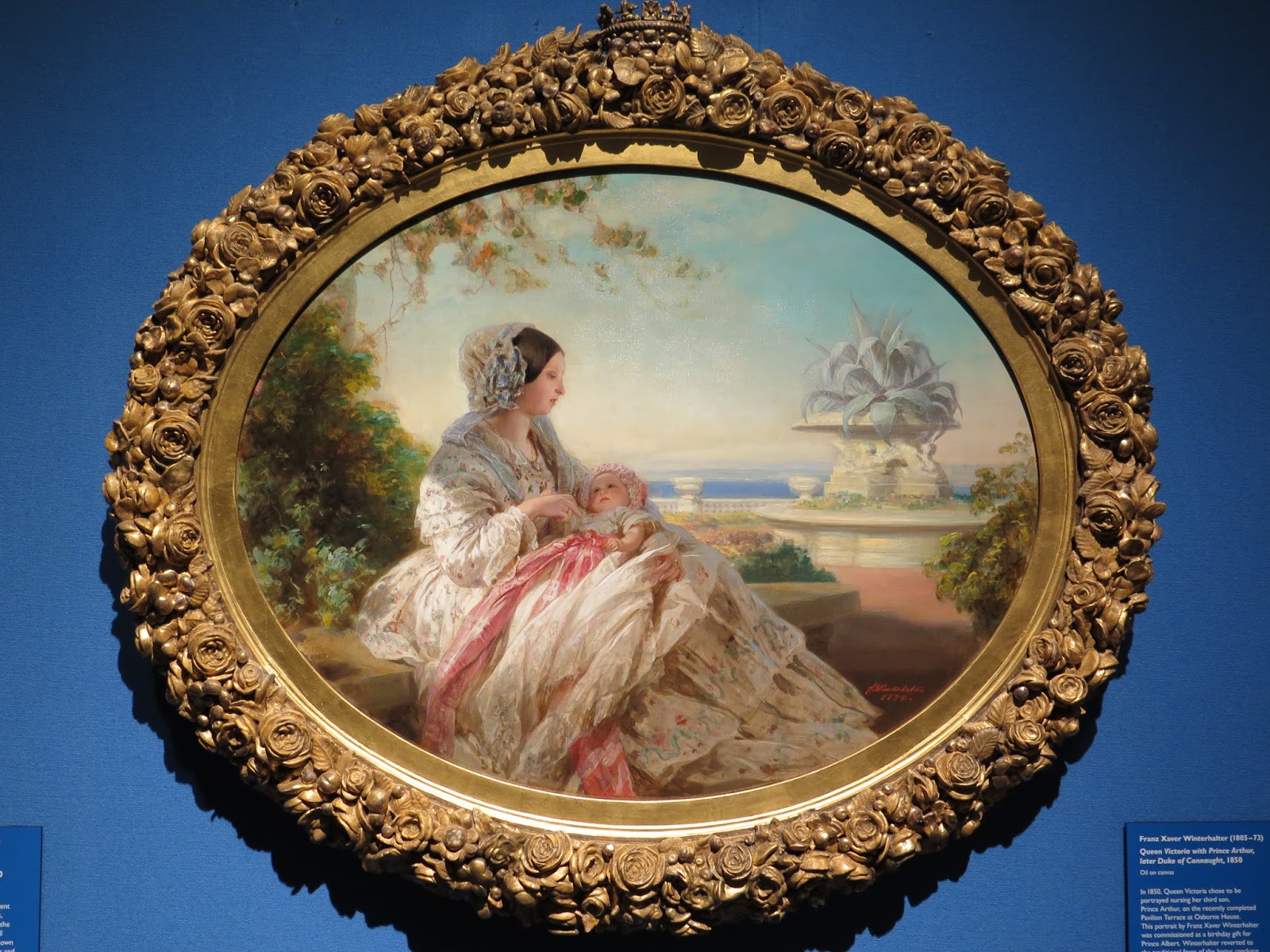
Another discovery was The Queen's Gallery at Buckingham Palace, an exquisite art space, where we saw the exhibition Painting Paradise, The Art of the Garden. It was stunning.

One beautiful room after another filled with art about gardens

I loved this painting


Of course, you can't go wrong hanging out at London's fabulous bookstores, such as Hatchard's.
We did a lot of this!


 All kinds of inspiration there

Or Liberty of London

Where they built a towering maypole out of their famous fabrics

I loved looking up


Evenings were filled with some great restaurant discoveries such as Cheyne Walk Brasserie


And walks through historic neighborhoods -- I thought that address sounded familiar!

Where literary giants lived


Evening walks took us past Duke's Hotel where Ian Fleming used to hang out and order martinis  "shaken, not stirred."

This place is filled with history

The Ritz Hotel

As is the Ritz Hotel on Piccadilly where we went for the first time to experience the elegance. We were not disappointed. We sat with two of their signature cocktails and people-watched. There are so many stories attached to this place. Did  you know that Churchill, Eisenhower, and de Gaulle met in the Marie-Antoinette suite for summit meetings during the Second World War? And that Noel Coward wrote songs here? Tallulah Bankhead sipped Champagne from her slipper during a press conference in the 1950's. It was a favorite of Hollywood stars.

The Royal Opera House

And on a very special evening we went to the Royal Opera House to see the new ballet Woolf Works which was inspired by three of Virginia Woolf's novels. It was staggering in its poignancy and beauty. Please try to see this if they stage it again. Anyone who loves ballet would love this one. It is inventive, original, touching and very beautiful. The costumes, the lighting, the imagery projected onto the stage, and the dancing were very special. The creator of the ballet came out at the end to take a bow and the applause was rapturous!

"Woolf Works" at the Royal Opera House
This is a scene from the first act based on "Mrs. Dalloway"
Image via here


Back home at the Stafford Hotel we were given a tour of the wine cellar which was used as a bomb shelter during World War II. There are actually gas masks and other war paraphernalia from that time that have never been moved. Amazing. Some nights it was almost impossible to go to sleep with so many stories whirling around in my brain. London is endlessly fascinating.


Charleston Farmhouse

Which is why it's always a good idea to get out of the city and visit some gardens! Next up, two day trips out of London. One to Petersham Nurseries, a magical place for anyone who loves gardens. And another to Charleston Farmhouse where I learned something very interesting this time. It has to do with Clive Bell's bedroom. Virginia Woolf's spirit seemed to preside over this trip!

********

P.S. I would never have known about Petersham Nurseries or the Virginia Woolf ballet if it weren't for two lovely friends in London who kept me informed as I was planning my trip. I was able to see both of them while I was in London. I caught up with my friend Sarah Berry over tea and scones. She has worked in interior design over the years and I loved hearing about her exciting new career opportunities. And I was able to meet up with a new friend, Miranda Mills, of the beautiful and inspiring blog Miranda's Notebook. We got together over a glass of wine at Quo Vadis restaurant. I am so grateful to have made these friends through the world of blogging!

Monday, May 11, 2015

Gratitude List

Mother's Day flowers  

 This week I want to borrow an idea from one of my favorite bloggers -- Miranda Mills of Miranda's Notebook. If you are looking for inspiration in styling your wardrobe, cooking great meals, making a cozy home, finding beauty in your surroundings or going to fabulous places and events in London, her beautiful blog is a wonderful resource. Every Friday she writes a gratitude list and this week I wanted to do one as well. I have so many things to be grateful for.

First, my family--


 I have the most thoughtful family. On Friday of Mother's Day weekend, the door bell rang and there were four flower arrangements for me. It turns out that my husband and my daughters had separately ordered flowers from my favorite florist Hollyflora to be delivered on Friday and they all arrived at the same time! It was so much fun to decorate the house with Mother's Day flowers.  


The scent of flowers perfumed each room


And the beauty of the arrangements reminded me of my wonderful family


Second, the Garden Conservancy--

A garden in Santa Monica

 I am very grateful for the Garden Conservancy. Do you know about this organization? They do the most wonderful work sharing and saving outstanding gardens throughout the country. Last weekend they held their Open Doors Garden Tour here in Los Angeles and I was able to visit several incredible gardens in West Los Angeles. The photo above shows a lily pad pond at a house in Santa Monica. We could have been at Giverny. Only on this day in May does the Garden Conservancy open the "doors" for us to see the secret gardens in our city. It is always amazing to discover these garden sanctuaries. Have you been to the Open Doors in your city? Go here to learn more.

The roses in Julie Newmar's garden.

Julie Newmar has one of the most beautiful and prolific rose gardens; she even has a rose named after her.


This charming vegetable garden is part of a large property that includes a rose garden, a great lawn, a swimming pool and a fabulous pool house and outdoor kitchen. They all exist behind a house in a neighborhood that I drive by all the time. I marvel that these beautiful gardens exist in Los Angeles and that their owners have put so much time, love and energy into them. Without the Garden Conservancy, we would never see them or learn so much about gardening.


Third, the Morgan Library in New York--

"A Certain Slant of Light: Spencer Finch at the Morgan"

I love the Morgan Library and Museum. Every time I am in New York I visit and feel grateful that this wonderful place exists. This time I noticed the beautiful courtyard with its colorful panes of glass and their reflections. I discovered that it is a special installation by American artist Spencer Finch. Inspired by the Morgan's great collection of medieval Books of Hours, he applied films of color to the windows in the four-story, glass-enclosed Gilbert Court to to make a kind of calendar based on the movement of the sun. This amazing installation is up until August 23. If you are in New York, be sure to stop by to see this; it is so inspiring. As I looked up, I was reminded of the soaring imaginations that went into the writing of each and every book contained in this fabulous institution. In addition to its impressive collection of books and manuscripts, The Morgan also has fascinating exhibitions. One of my favorites was The Little Prince a couple of years ago.


Fourth, tea and scones with my book club--

Image via here

I am in a couple of book clubs and each one has the most wonderful women. I have always thought that the members in a book club are more important than the books. If you have the right combination of enthusiastic, curious and open-minded people, good books and exciting discussions will naturally follow. This month we read Vanessa and Her Sister by Priya Parmar. It's about Vanessa Bell, Virginia Woolf and the early days of the Bloomsbury Group. (review to follow) The lovely woman who was hosting our meeting decided to have an English tea for the occasion. She made delicious scones, delicate tea sandwiches and served tea that she brought home from Fortnum and Mason in London. Amazingly, she had just returned from a trip to England where she visited Charleston, the home of Vanessa Bell, and showed us her photos. It was such a special meeting and everyone was touched by all the trouble she had gone to.


Fifth, the world of blogging--


I am so grateful for the world of blogging and the amazing people I have met because of it. When I was in New York last month, I met fellow blogger Gail Gallagher, a talented artist who paints in the Hamptons. She writes a lovely blog about the vibrant art scene in the Hamptons. We had made a date to meet for a glass of wine at my hotel. Something came up and she needed to reschedule; we weren't sure we would be able to get together. In the meantime, she dropped off a package for me at the hotel. When I opened it the next day, I found this beautiful little seascape that she had painted. I was so touched. Fortunately we managed to get together the following morning for a cup of tea and I was able to thank her in person. I now have a new friend in New York and a beautiful painting to remind me of her. Go here to see Gail's blog Painting in the Hamptons  and her art.

I hope you had a good weekend and a wonderful Mother's Day!