Monday, March 11, 2013

A Touch of Glamour

Miles Redd signing his book "The Big Book of Chic"

Sometimes it's fun to add a little glamour to our lives.  Interior designer Suzanne Rheinstein owns one of the prettiest home decor shops in Los Angeles.  Hollyhock is filled with beautiful furniture, antiques, accessories, and art for the home.  It is also the site of some of the best book signings around.  Suzanne hosts elegant evenings that feature interior designers who have written design books.  It is always exciting to go to these events and meet the designers. Lately it seems that many of them are writing books that are as much about their inspiration as about the homes they create for their clients.  The books are beautiful, dreamy, collage-like volumes that intersperse quotes, favorite books, photos of style mentors, images of works of art, and beautiful details of everyday life with images of the rooms they design for clients.   These are the sources of inspiration for these designers and the story of how they pull them all together and use them in their work is very exciting to see.

Suzanne Rheinstein's store Hollyhock in West Hollywood

A couple of months ago I attended a book signing that Suzanne hosted for New York City-based decorator Miles Redd and his book The Big Book of Chic.  As Miles says, "This book is about big glamour -- the kind that inspires the sensation of dancing across an MGM soundstage, silhouetted by a klieg light."

Suzanne Rheinstein with Miles Redd

There are some people that have to be described as debonair.  Such is Miles Redd.  It is almost as if he belongs to another age -- that period of flamboyant glamour between the wars when Cecil Beaton and Coco Chanel were the tastemakers of the day and Noel Coward was the greatest wit.  He is one of today's bright young things, a brilliant young interior designer whose exuberant take on traditionalism includes a mix of playful colors and eclectic glamour that has won him many fans.


After reading up on Miles, I learned that his lucky clients think his style feels like the world's most glamorous party. His sense of fun is contagious.  Not surprisingly, he writes that his favorite period of time is that "between the wars, the era of madcap, bright young things.  Frivolity gets a bad rap, but I will defend it to my dying day." This book includes the beautiful, dramatic, and cozy settings he has created for his clients as well as a medley of images of people, artists, and places that inspire him.  These include Cecil Beaton portraits, Rene Gruau sketches, Fitzgerald and Mitford novels, and royal memoirs that have influenced his unique approach to decorating.

Here are some of the quotes and images that have inspired his design aesthetic:


And here are some of the glamorous and whimsical settings he has created:


These rooms evoke old-style glamour.  They could be the setting for fabulous parties and it is easy to  imagine Noel Coward, Truman Capote or Coco Chanel in attendance.

It is true that sometimes we just need a dose of glamour to brighten up our day.  "The Big Book of Chic" by Miles Redd will do just that, with a healthy dose of wit and whimsy thrown into the mix.   The book reinforces the idea that creativity comes from many different places and is fueled by the evanescent impressions that come our way each day: the books we read, the trips we take, the art we see, the writers we admire.  All of these things live in our memory and if we hang on to them, we will be able to use them later.  Inspiration can come from many different sources -- a beautiful satin ribbon, an antique tapestry, a dinner party scene from a favorite book, a view of the Italian countryside or a painting by a Flemish master.  These impressions inspire the way we decorate our homes, plant our garden, set our dinner table, stitch a needlepoint pillow, paint a watercolor, or write a poem. 

As Miles Redd says about his book,
  "It is a piled-on mix of work and fantasy and perhaps you can make it your own."


Last seven photos via here

Thursday, March 7, 2013

Garden Gates


Have you ever noticed how enticing a garden gate is?


It is an anticipation of the pleasures in store, hinting at what lies beyond. It brings to mind the book The Secret Garden by Frances Hodgson Burnett, which may be the most evocative book for anyone who loves a garden. It is one that lingers in the memory forever.


A garden gate is the transition between two spaces, the threshold into the retreat that the gardener has created. A whiff of honeysuckle may hit us, gravel crunches under our feet, a pathway beckons us to move forward. Expectations, garden secrets, surprises, the dazzle of a fountain, the language of flowers, the poetry of herbs all take us back to a childlike wonder as we contemplate the garden sanctuary just beyond the gate.


And there it is. This private Eden created by the gardener. We enter this magical spot, this outdoor room. We are bathed in sunlight and inspired by color, texture, and scent. The birds are chirping, the flowers are blooming, and the fragrance of rosemary wafts through the air. A place to think, to dream, to reflect on the beauty of nature. A place to count our blessings.

Photo from "Gertrude Jekyll and the Country House Garden"

This is the time of the year when gardens start to come into their own. Garden tours will be happening all over the country. Go here to find out about the Garden Conservancy Open Days program which allows access to more than 300 stunning properties across the country. And if you live in Los Angeles, don't miss The Robinson Gardens Annual Garden Tour.

Visit the public gardens in your city, enjoy your own garden if you have one, or think about starting one of your own. A small vegetable or flower garden is a great way to begin. There are wonderful how-to books to get you started -- The Garden Primer by Barbara Damrosch is one -- and also inspiring books for the armchair gardeners out there who just want to admire --  Gertrude Jekyll and the Country House Garden by Judith B. Tankard is another. And when you travel, be sure to find out where the gardens are. I will never forget my trip to Paris when I was 21 and spent part of each day in a small garden on the Ile de la Cite reading my mail and writing postcards. The time in that garden is one of the most vivid memories from the trip. Visiting a garden will slow you down, help you recharge, and figure out what's next.

Spring is right around the corner!

First four photos via Pinterest     

Monday, March 4, 2013

Constance Spry

British floral designer Constance Spry
Photo via here

"China tea, the scent of hyacinths, wood fires, and bowls of violets -- that is my idea of an agreeable February afternoon."-- Constance Spry

A gardening friend and I have a theory.  We are fascinated with the eccentric, confident, charming, and visionary women gardeners we have read about and whose gardens we have seen.  We think there should be a book of their collected stories.  These women share so many characteristics.   Recently I learned about another irresistible figure in this field.  And I thought, oh the power of words.  One quote and a new world opens up.

But first, back to the pantheon of women gardeners she joins.  It is true that in the history of gardening and flowers there have been many outstanding women who were trailblazers.  Vita Sackvile-West, Gertrude Jekyll, Rosemary Verey, and Beatrix Ferrand are women who stand out in their field.  These were women who saw the world with fresh eyes and were able to create something new; they had the talent to turn their vision into a reality.

When I saw the above quote by British floral designer Constance Spry, I was lead on a very pleasant and instructive journey.  I needed to find out who she was.  Her words had conjured up a lovely image.  Yes, I thought, that is exactly what I would like on a February or March afternoon --  "china tea, the scent of hyacinths, wood fires, and bowls of violets."  And so I started to read about her and learned that Constance Spry was another trailblazer to add to the list. Her field was flowers and she would change the way people used them in flower arrangements forever.  Don't you love stories about strong and visionary women who were not afraid to shake things up?  A book of their collected stories would be such a good read.  

Constance Spry's flower school
Photo via here

The name Constance Spry had been familiar to me over the years, but if I am honest, mainly because of the David Austin rose named after her.  It turns out that she was an innovator in the art of flower arranging, transforming the way people looked at flowers and decorated with them in the home.  She inspired many florists in the 1930's with her natural, fluid and loose flower arrangements.  Her romantic and unconventional arrangements included garden flowers, leaves, branches, berries, grasses, and other humble items that were usually discarded at the time, but are used by florists today.  In fact, many contemporary florists cite Constance Spry as their biggest influence.  The natural and romantic flower arrangements of today that looked like they were just plucked from the garden are descendants of her work.  But in the 1930's when she was starting her flower business, the prevailing style was a tight and formal look with stiffly wired hothouse blooms.  When Constance Spry entered the scene, the public didn't know what hit them.

As I read more, I learned that in the early thirties Constance Spry created a spectacle on Bond Street when she designed a display of scarlet roses and red kale leaves for a perfumery window.  It attracted crowds so enormous that the police were brought in to control traffic.  The public was fascinated with this daring new flower designer.  Exhibiting confidence and style, she had a joie de vivre that was contagious.  She became acquainted with many artistic figures of the time, such as Cecil Beaton and Syrie Maugham and easily entered their world of flamboyant glamour.  She inspired everyone with her confidence, talent and passion.  And despite having wealthy clients, she always promoted the concept that flowers were for everyone and would demonstrate how to create beautiful arrangements with the most humble ingredients.  After a very modest childhood, her life had drastically changed and in the 1930's Constance Spry was invited to exclusive dinner parties and social events.  She became the most sought after florist in English society. Her highest honor came when she was chosen to be the florist for Queen Elizabeth II's wedding and coronation.  

One of Constance Spry's floral arrangements
Photo via here

After doing a little more research, I found out a few more things about this very interesting woman.  She was born in Derby, England in 1886 and was the oldest of five children.  Her father was a railway worker who went to night school to become an administrator in the education system.  When she was nineteen years old she enrolled in a course for health lecturers instituted by the National Health Society.  Afterwards she got a job as a lecturer and became an agent for social reform.  In Dublin where her family had moved, she met the Countess of Aberdeen who took her under her wing.  Constance joined the countess in her efforts to improve the health of the Irish poor.  She traveled through Ireland as a lecturer for the Women's National Health Association.  In 1921 she moved to London where she became headmistress at a school for impoverished children.  She ran it somewhat unconventionally, filling it with art and flowers because she believed in the healing and inspiring power of beauty on her young students.

And gardening and flowers were her true love.  She took up gardening at her house in the country and filled the rooms with her experimental flower arrangements.  She was inspired by 17th century Dutch flower paintings and her own collection of 18th and 19th century flower books.   On Mondays she would travel from her home in the country to her school in London with a basket of flowers from her garden and decorate the school with flower arrangements.   She noticed the beneficial effect the flowers had on her young students.  As more people began to see her work, she began to receive commissions for private homes and events.  She was becoming famous.  Everyone wanted to be the person who had discovered Constance Spry and pass her name on to their friends.

    
Arrangements like this by Amy Merrick, a contemporary florist who works out of New York, show the influence of Constance Spry.  Photo via here

But it was when she met theatre designer Norman Wilkinson that her life changed.  He convinced her to give up her position as head of the school and become a full-time floral designer in London.  She opened up a florist shop and flower arranging school in Mayfair and it soon became one of the most successful of its type in London.  Everyone wanted their homes decorated with Constance Spry flower arrangements and many people wanted to learn how to do it themselves.  She was the most sought after floral designer in London, receiving commissions from many famous people including the Duke and Duchess of Windsor.  She worked with interior designer Syrie Maugham (wife of the writer Somerset Maugham) and many other talented designers on their design projects.  They would not think of decorating a house, an event or a party without flowers by Constance Spry.


The Surprising Life of Constance Spry by Sue Shephard was published in 2010 and is a wonderful book about this legendary figure.


In February of 2012 Constance Spry was honored with an English Heritage blue plaque on the site of her hugely successful Mayfair shop.  Photo via here

I loved learning about Constance Spry and her belief in the healing power of beauty.  She thought that everyone would benefit from beauty in their homes and that flowers would provide it.  Her theories were meant to apply to all and she encouraged people to use wild flowers and berries plucked from their surroundings to bring beauty into their homes. She shaped the way we decorate with flowers today and wrote twelve books on the topic.  If you would like to learn more about her, read "The Surprising Life of Constance Spry."  It is a fascinating book about this amazing woman who was not afraid to shake things up and leave her mark in the field of floral design.


Monday, February 25, 2013

Looking Forward To...

February can be a cold and dreary month, but there are so many things to look forward to.
Here are a few that should make staying in much more fun.

Television to watch:

Anglophiles can rejoice.  If you are like me and can't get enough of British costume dramas or British actors such as Benedict Cumberbatch, you will be happy to know that just as we say good-bye to "Downton Abbey," another costume drama from Britain arrives this week.  

Rebecca Hall and Benedict Cumberbatch

Parade's End is a sumptuous five-part mini-series co-produced by HBO and BBC that is based on a quartet of novels written by the British writer Ford Maddox Ford.  The series of books, which are back in print from Vintage, is about Britons during the First World War.  They have been adapted for television by the playwright Tom Stoppard.  The story follows the character Christopher Tietjens (played by Cumberbatch), heir to the estate of Groby.  He goes from a government worker to an officer in France during the war.  The show has already been seen in Britain and reviewers have called it witty, literary and classy.  It takes us back to Edwardian England and features period fashions, grand homes and the beautiful English countryside.  There is a love triangle, incredible performances by the three leading actors, and great dialogue written by Stoppard.  I read that this production brilliantly captures the London of the 1920's. It airs on HBO and begins Tuesday night.  The cast includes Benedict Cumberbatch ( I can't get enough of him -- he was so good in Sherlock), Rebecca Hall, Adelaide Clemens (the three leads), Rupert Everett, Miranda Richardson, Jack Huston and Janet McTeer.  People are calling it "the thinking man's Downton."  Can't wait to see this one!


Jeremy Irons discussing "Henry IV" and "Henry V" on the stage of the Globe Theatre in London

And speaking of literary inspiration from England, the new series Shakespeare Uncovered sounds fascinating.  It has been airing on PBS throughout the month of February.  (I have recorded it and am looking forward to watching all the episodes.)  The series features actors and directors, such as Jeremy Irons, Derek Jacobi, and Trevor Nunn, talking about how some of the great works by Shakespeare have been interpreted over the years.  They also talk about the challenges of performing and directing the central roles.  I read that the episode with David Tennant on "Hamlet" (he played the title role with the Royal Shakespeare Company) is especially good.  I did watch a clip from that episode with Tennant discussing how the character Hamlet (and the audience) knows from the moment in the play that Hamlet agrees to avenge his father's death he is a dead man.  That kind of action can result only in the character's death.  I had the chills listening to him...

As a passionate Shakespeare fan, I love a program that celebrates Shakespeare's plays and continues a discussion that has been going on for more than four hundred years old.  The fascination with Shakespeare is endless and his plays continue to captivate us.  This series about some of the most important plays should be enlightening and offer fresh insight into how actors and directors approach them.  By the way, have you been to the Globe Theatre in London to see a Shakespeare production?  If you are in London, a visit to the Globe Theatre is very special.  I saw a production of "Much Ado About Nothing" at the Globe and it was thrilling.


Art to see:


Vermeer's "The Girl with the Pearl Earring" is currently in an exhibition at the De Young Museum in San Francisco.  This is your chance to see this exquisite painting up close and is definitely worth a trip to San Francisco.  When it leaves the U.S., it will return to its home at the Royal Picture Gallery Mauritshuis in the Netherlands.


Books to read:


Because this year is the 200th anniversary of "Pride and Prejudice," there will be new books on Jane Austen.  This one by Paula Byrne has gotten great reviews and sounds excellent.


P.G. Wodehouse:  A Life In Letters
Edited by Sophie Ratcliffe

The letters of the beloved British writer P.G. Wodehouse have been collected in a new book.  Letters can give us a vivid portrait of the writer and I am looking forward to learning more about P.G. Wodehouse, the comic genius who gave us Jeeves and Wooster.


Nancy: The Story of Lady Astor by Adrian Fort

I can't wait to read this new biography of Nancy Astor, the American divorcee who moved to London in 1904, married the very wealthy American Waldorf Astor, and became the first woman member of the British parliament in 1919.  She remained in parliament for the next 26 years.  What a woman!


 The end of February, beginning of March is the last part of winter.  It is a perfect time to sink into some good books, watch some compelling British television, and maybe see a Dutch masterpiece.  After San Francisco, "The Girl with the Pearl Earring" travels to Atlanta, and then to the Frick Museum in New York before returning to Europe.


Photo one via here, photo two via here, photo three via here, photo four via here, photo five via here, photo six via here   

Friday, February 22, 2013

Reading Agatha Christie


Right now I am reading The Murder at the Vicarage by Agatha Christie.  Generally speaking, I have found that when I can't figure out what to read or when I need a guaranteed dose of comfort -- nothing works quite so well as a mystery. Do you enjoy reading mysteries?  For me, they are the equivalent of a cup of tea and a fire in the fireplace.

I haven't read anything by Agatha Christie for years, but recently I was intrigued by a fabulous review of The Mousetrap by Agatha Christie, the longest running play in history.  It has been playing in London for more than sixty years.  Amazing!  In his review, the writer wrote that for him Agatha Christie's books represented a tranquil respite from every day anxiety.  My interest was piqued and, when combined with my recent indecision about what to read next, I decided to go in the direction of Agatha Christie.

And so I settled into "The Murder at the Vicarage" and breathed a sigh of relief as I had found the perfect book for right now.  I thought to myself:  yes, Agatha, please take me to the small village in the English countryside where the characters reside.  Let me get to know all the inhabitants of the village,  learn about their customs and ways, and which ones had a motive for killing the murder victim.  As it turns out, many of them did.  Please lead me through the streets of the village and the rooms of the houses by giving me maps and floor plans.  Introduce me to the central characters: the vicar and his glamorous wife, the nervous curate, the Colonel whom everyone hates and wishes dead, the Colonel's young wife who is having an affair with a handsome artist, the chief of police and the Inspector.  And please bring in Miss Marple, the village busy body and amateur sleuth who seems to know every one's business. Before the book ends, there will be murder, clues, red herrings, discredited witnesses, confessions, confusion, suspicious servants and plot twists.  As Miss Marple says, "One does see so much evil in a village."  

In other words, bring on the formula that is as comforting as a cup of tea.  I love going to that cozy  place where all I am required to do is solve a puzzle.  I will happily spend time there.  It is the formula for the well-ordered world of the mystery novel. A happy antidote to the chaos of the real world we deal with every day and which is often represented in contemporary novels.  Just for now, give me the comfort of visiting this orderly microcosm.  Soon I will be seeking more challenging reads, but right now I am happily ensconced in the village of St. Mary's Mead with Miss Marple and the cast of characters.  I think a pot of tea and some scones may be in order.  What could be better?


First image via Pinterest

Monday, February 18, 2013

Blossoms


This is the time of year when we all start to yearn for spring.  Recently I hosted a lunch for my garden group and the topic was roses.  The speaker was the rose expert at the Huntington Library and Botanical Gardens and in his excellent lecture he spoke about the best roses for Southern California.  But before we heard about roses, the topic we were all discussing was the flowering pear tree.  We walked around my garden before the lecture and admired the tree which has recently burst into blossom.  It really has been a glorious sight each day and there have been moments when I have walked out the back door to see it and wanted to do a little dance "for sheer joy" just like Elizabeth did in Elizabeth and Her German Garden:

"I am always happy (out of doors be it understood, for indoors there are servants and furniture), but in quite different ways, and my spring happiness bears no resemblance to my summer or autumn happiness, though it is not more intense, and there were days last winter when I danced for sheer joy out in my frost-bound garden in spite of my years and children.  But I did it behind a bush, having due regard for the decencies.

There are so many bird-cherries round me, great trees with branches sweeping the grass, and they are so wreathed just now with white blossoms and tenderest green that the garden looks like a wedding.  I never saw such masses of them; they seem to fill the place.  Even across a little stream that bounds the garden on the east, and right in the middle of the cornfield beyond, there is an immense one, a picture of grace and glory against the cold blue of the spring sky."  -- Elizabeth Von Arnim


Even though it is not yet spring, the sight of that tree can elicit a serious case of spring fever.  There is just something so hopeful about those white blossoms against the blue of the sky.  The wind shakes the branches and the ground is carpeted in white petals.      


The British playwright and novelist J.B. Priestley, who by his own admission was a grumbler by nature, waxed poetic at the sight of spring blossoms:

"Blossom--apple, pear, cherry, plum, almond blossom--in the sun...after fifty years this delight in the foaming branches is unchanged.  I believe that if I lived to be a thousand and were left with some glimmer of eyesight, this delight would remain...At least once every spring on a fine morning... we stare again at the blossom and are back in Eden."


 On a day like this, spring does not seem very far away and I have been dipping into some of my favorite garden books for inspiration.


 I can't get enough of these inspiring stories about gardens and garden dreamers


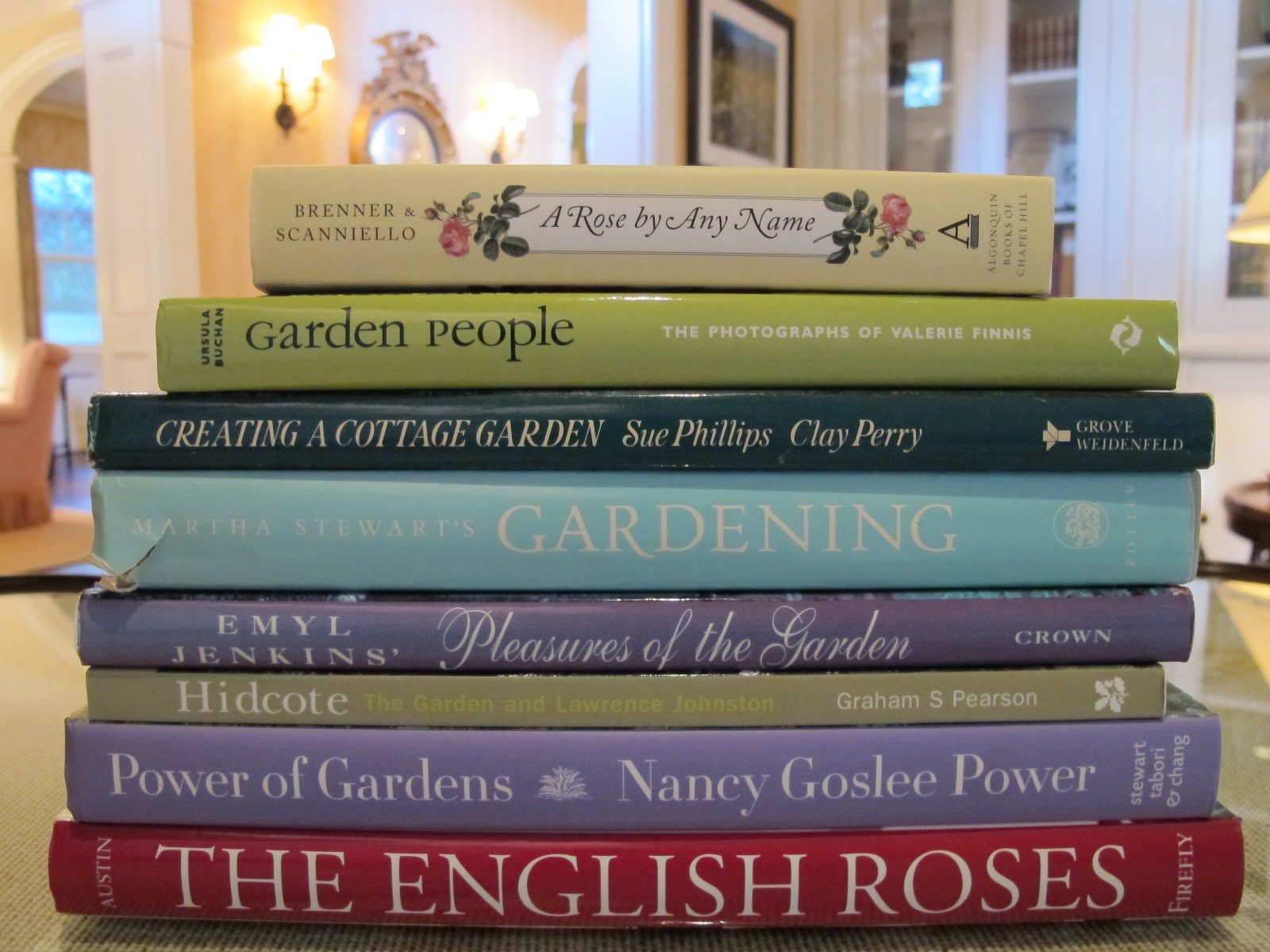
Beverley Nichols, Vita Sackville-West, and Elizabeth Von Arnim are three of my favorite garden writers.   I love learning how the garden becomes a metaphor for finding hope and meaning in their own lives.  I also love the inspirational and how-to books on creating a garden.  My copy of Martha Stewart's Gardening is tattered from so much use.  Gardeners are often bookish types who love reading books about their passion during the winter months.  My stack of garden books is growing all the time and dipping into them on a chilly February day is one way to bring spring just a little closer.

Friday, February 15, 2013

Reading Nora Ephron


"Above all, be the heroine of your life, not the victim."
-- Nora Ephron, commencement address at Wellesley College

It is impossible not to love the woman who wrote that line.  On Wednesday night over a homemade dinner of roast chicken and popovers (I think Nora would have approved), my book club discussed the 1983 novel Heartburn by Nora Ephron.  With the death of Nora Ephron last summer, we lost a national treasure.  She was a wise and funny writer, a modern day Dorothy Parker.  Her book "Heartburn" was published in 1983 and became a bestseller as well as a popular film starring Meryl Streep and Jack Nicholson.  The story about her painful divorce, told in a humorous way, had all of us laughing.  She was a playwright, screenwriter, and successful film director.  Her non-fiction books such as I Feel Bad About My Neck: And Other Thoughts On Being a Woman and I Remember Nothing: And Other Reflections were also bestsellers.  In addition to all those accomplishments, she was an excellent cook!  She was an inspiration and role model for many women.  Her play Lucky Guy is about to premiere on Broadway starring Tom Hanks.  She is clearly having a moment right now.  And so when I found out that my book club decided to read "Heartburn" for our next meeting, I was thrilled.  It was time we revisited her.


Most of us had read "Heartburn" when it was published thirty years ago.  Rereading this book was a pleasure; it felt like visiting an old friend, the one who always made you laugh.  The book is funny, honest, and real.  During our discussion, one of the members read from Frank Rich's beautiful essay on Nora Ephron called Nora's Secret that he wrote for The New York Magazine right after her death.  If you haven't read this, please do.  It is an excellent piece about Ephron -- her accomplishments, her effect on others, and the reaction to her death.  For example, after her death there were twenty articles about her in the New York Times alone.  She was diagnosed with leukemia six years before she died and hardly anyone knew.  She continued to work, had many projects going, and continued to mentor young writers.

When we talked about "Heartburn," we kept coming back to the fact that it opened up the public discussion about divorce in a powerful way.  It was based on Ephron's own life during the period of time when her husband had an affair with another woman.  Ephron was seven months pregnant with her second child.  It touched a chord in so many women and to this day the book provokes memories, stories, and comparisons between what so many women lived through and what Ephron lived through.  Her story was their story.  The miracle was that Ephron could write about such a painful subject in an entertaining and humorous way.  We all cited our favorite passages and quotes.  And our favorite recipes, since Ephron peppers the story with recipes she loves.  The main character Rachel Samsat is a successful cookbook writer. Food and laughter are the glue that holds this woman together.  It is also the winning formula that makes this book such a warm and witty classic.

My favorite Nora Ephron quote, though, is the one from her speech at Wellesley College (see above).  Many of us have been asked if there is a motto or quote that we try to live by.  I think I may have found mine.  Ephron inspired us all to be the heroine of our own lives; the life she lived was an example of how it could be done with humor, grace and style.

The lesson from "Heartburn" seems to be: if you push through adversity and find something to laugh about along the way, you will come out stronger in the end.  As many people said when the book first came out, "writing well is the best revenge."  I would add, cooking well also.

Here is the recipe for Perfect Roast Chicken that our hostess made for us at the book club meeting.  It was delicious and we all agreed that Nora would have loved it.

What have you been reading in your book club?

Wishing you a wonderful weekend!

Top photo via here